

Trust can feel fragile after infidelity or emotional disconnection, leaving couples in Bergen County questioning their foundation. Relationships thrive when partners experience emotional attunement, accountability, and transparent communication, yet betrayal often creates deep emotional distance and suspicion. With therapy, couples learn to rebuild trust through consistent, reliable actions and empathic conversations, transforming old wounds into renewed emotional safety. Discover practical strategies for restoring connection and building a stronger relational bond.
Table of Contents
- Trust As The Foundation In Couples Therapy
- Types And Manifestations Of Trust Issues
- How Couples Therapy Rebuilds Broken Trust
- Therapeutic Approaches For Restoring Trust
- Common Challenges And Strategies For Success
Key Takeaways
| Point | Details |
|---|---|
| Rebuilding Trust is Essential | Couples therapy focuses on restoring trust as a foundational element for relationship healing and emotional connection. |
| Emotional Intelligence is Key | Developing emotional intelligence helps partners understand each other’s needs and vulnerabilities, fostering a safer relational environment. |
| Therapeutic Approaches Offer Structure | Various therapeutic methods, such as Emotionally Focused Therapy and Cognitive Behavioral Therapy, provide structured interventions for effective trust restoration. |
| Address Challenges Together | Successful trust rebuilding involves recognizing common challenges and collaboratively seeking solutions to promote mutual growth and understanding. |
Trust as the Foundation in Couples Therapy
Couples therapy centers around rebuilding trust as the critical framework for relationship healing. Trust isn’t just an abstract concept – it’s the fundamental emotional infrastructure that enables partners to feel safe, vulnerable, and emotionally connected. When trust has been compromised, couples require strategic therapeutic interventions that help reconstruct their relational foundation.
Research from leading relationship experts reveals several key dimensions of trust restoration:
- Emotional Attunement: Creating deep empathetic understanding between partners
- Accountability: Taking genuine responsibility for past actions
- Transparent Communication: Establishing honest, open dialogues
- Consistent Behavioral Changes: Demonstrating reliable commitment to rebuilding connection
The Gottman Method’s approach to couples therapy emphasizes that trust develops through predictable, reliable interactions. Partners must consistently show up for each other, demonstrating emotional availability and creating a sense of psychological safety. This means moving beyond mere verbal promises and actively showing commitment through tangible actions.
In therapeutic settings, rebuilding trust becomes a collaborative process. Therapists guide couples through structured conversations that help partners understand the root causes of trust ruptures, develop empathy, and create new relational patterns. The goal isn’t just to return to previous relationship dynamics, but to construct a more resilient, authentic connection.
Pro tip:Start rebuilding trust through small, consistent actions that demonstrate reliability and emotional presence.
Types and Manifestations of Trust Issues
Trust issues emerge as complex psychological patterns that profoundly impact romantic relationships, creating intricate emotional barriers between partners. These challenges rarely manifest as simple disagreements, but instead represent deep-seated psychological responses rooted in past experiences, attachment styles, and relational traumas.
Research identifies several primary manifestations of trust issues:
- Emotional Distancing: Intentionally creating psychological space to protect oneself from potential hurt
- Hypervigilance: Constantly monitoring partner’s behaviors for potential signs of betrayal
- Communication Breakdown: Reluctance to share genuine feelings or vulnerability
- Chronic Suspicion: Persistent doubt about partner’s intentions and actions
- Defensive Behaviors: Preemptive protective mechanisms that block authentic connection
Attachment theory research reveals that trust issues frequently stem from different psychological attachment styles. Individuals with anxious or avoidant attachment patterns are more likely to experience profound relational trust challenges, characterized by intense emotional insecurity and difficulty maintaining intimate connections.
Understanding these trust manifestations requires recognizing their nuanced psychological origins. Trauma, past relationship betrayals, childhood experiences of inconsistent caregiving, and unresolved emotional wounds can significantly contribute to developing complex trust dynamics. Therapeutic interventions must therefore address not just surface-level behaviors, but the deeper emotional landscapes that generate these protective mechanisms.

Pro tip:Recognize that trust issues are adaptive survival strategies, not personal failures, and approach them with compassion and professional guidance.
How Couples Therapy Rebuilds Broken Trust
Couples therapy offers a strategic, structured approach to rebuilding trust that goes far beyond simple communication techniques. Trust restoration is a nuanced, intentional process that requires both partners to engage in deep emotional work, examining the root causes of relational ruptures and developing new patterns of interaction.
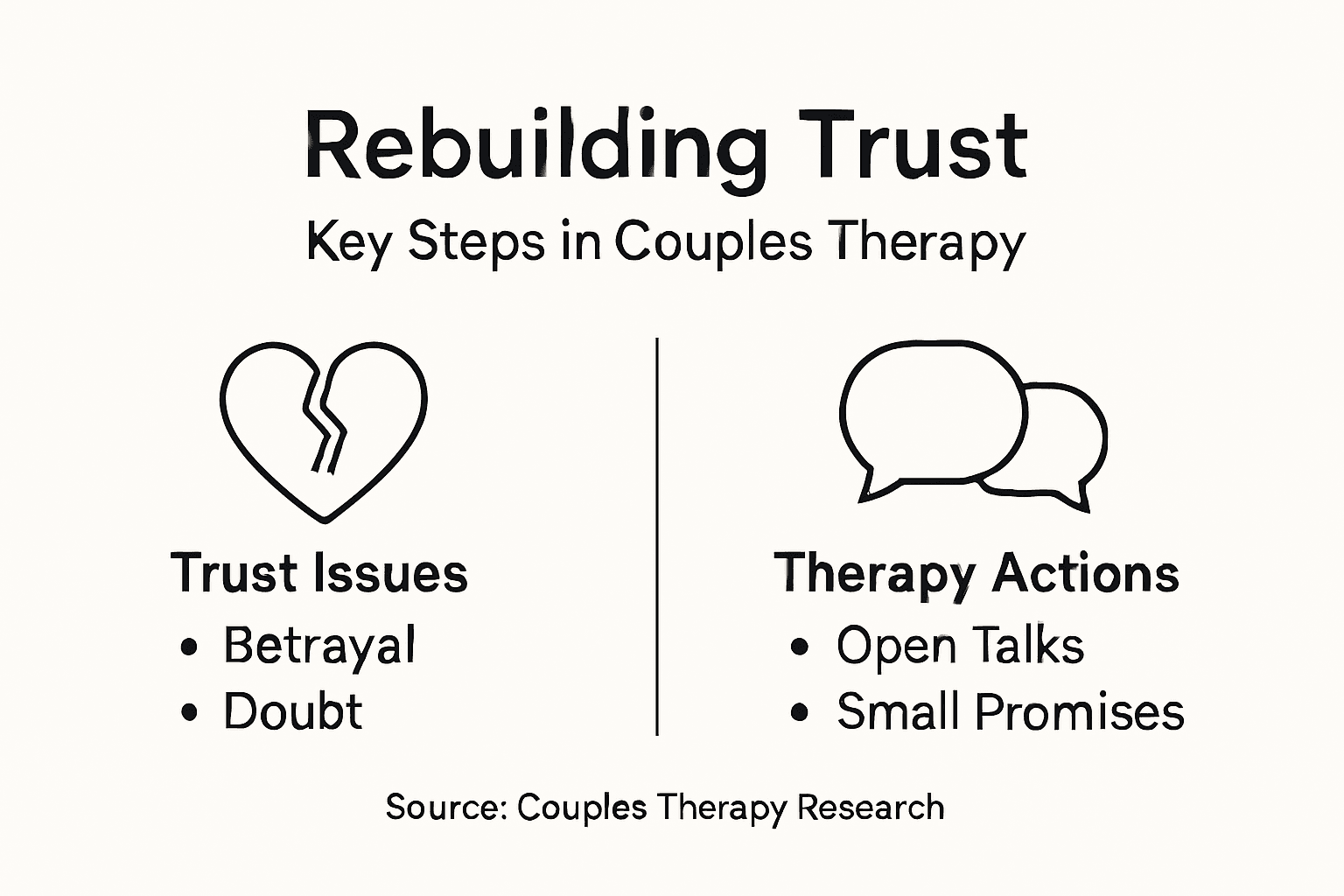
Key strategies for rebuilding trust through therapeutic intervention include:
- Accountability Conversations: Creating safe spaces for genuine acknowledgment of past hurt
- Transparent Communication: Developing skills to express vulnerable emotions honestly
- Conflict Resolution Techniques: Learning constructive ways to address disagreements
- Emotional Repair Mechanisms: Understanding how to validate and heal emotional wounds
- Mutual Vulnerability: Gradually rebuilding intimacy through controlled emotional exposure
Recovering from infidelity requires more than superficial apologies. Therapists guide couples through a comprehensive process of understanding the systemic dynamics that contributed to the breach of trust, helping partners develop deeper insights into their relational patterns and individual psychological triggers.
The therapeutic journey involves carefully structured interventions that transform destructive relationship dynamics. Therapists help partners develop emotional intelligence, teaching them to recognize and respond to each other’s underlying needs, fears, and vulnerabilities. This process involves creating a collaborative environment where both individuals feel heard, validated, and empowered to create meaningful change.
Pro tip:Approach trust rebuilding as a mutual healing journey, focusing on understanding and growth rather than blame and punishment.
Therapeutic Approaches for Restoring Trust
Couples therapy employs sophisticated therapeutic approaches designed to systematically rebuild trust, addressing the complex emotional landscapes that emerge after relationship breaches. These methodologies go beyond traditional counseling, offering targeted interventions that help partners heal, reconnect, and develop more resilient relational dynamics.
Primary therapeutic approaches for trust restoration include:
- Emotionally Focused Therapy (EFT): Addressing attachment wounds and emotional vulnerabilities
- Cognitive Behavioral Therapy (CBT): Restructuring negative thought patterns and behaviors
- Acceptance and Commitment Therapy (ACT): Developing psychological flexibility and value-aligned interactions
- Narrative Therapy: Reframing relationship stories and individual perspectives
- Systemic Family Therapy: Exploring broader relational and contextual influences
Different types of couples therapy offer unique strategies for rebuilding trust. Acceptance and Commitment Therapy, for instance, emphasizes mindfulness and helping partners accept painful emotions while committing to constructive relationship behaviors, creating a foundation for genuine emotional reconnection.
Here’s a summary of leading couples therapy approaches and their unique focus areas:
| Approach | Key Focus | Beneficial For |
|---|---|---|
| Emotionally Focused Therapy (EFT) | Healing attachment wounds | Couples seeking deeper intimacy |
| Cognitive Behavioral Therapy (CBT) | Changing negative behaviors | Partners needing practical tools |
| Acceptance & Commitment Therapy (ACT) | Building resilience and mindfulness | Couples facing lingering hurt |
| Narrative Therapy | Shifting personal and relationship stories | Individuals with past trauma |
| Systemic Family Therapy | Understanding family context | Couples with complex dynamics |
Therapeutic interventions are carefully designed to create psychological safety and facilitate gradual trust restoration. Therapists guide couples through structured conversations, helping them develop emotional intelligence, improve communication skills, and create new patterns of interaction that promote mutual understanding and healing. The goal is not just to return to previous relationship dynamics, but to develop a more authentic, resilient connection.
Pro tip:Approach trust rebuilding as a collaborative journey of mutual understanding, prioritizing compassion over perfection.
Common Challenges and Strategies for Success
Rebuilding trust is rarely a linear process, with couples encountering complex psychological obstacles that can derail their healing journey. Understanding these challenges is crucial for developing effective strategies that promote genuine relational restoration and emotional reconnection.
Common challenges in trust rebuilding include:
- Emotional Asymmetry: Uneven emotional processing between partners
- Lingering Resentment: Persistent negative emotions blocking healing
- Communication Breakdowns: Difficulty expressing vulnerable feelings
- Power Imbalances: Unequal dynamics affecting relationship equity
- Repetitive Negative Interaction Patterns: Cyclical destructive behaviors
Communication tips for couples in recovery highlight the importance of developing intentional dialogue strategies. Therapists help partners address systemic and sociocultural factors that contribute to relational tensions, focusing on creating fair, reciprocal exchanges that restore mutual respect and understanding.
Successful trust restoration requires partners to move beyond surface-level interactions, developing deep emotional intelligence and commitment to personal growth. This involves creating a collaborative environment where both individuals feel safe exploring their vulnerabilities, acknowledging past hurts, and actively working toward shared relational goals. The therapeutic process becomes a transformative journey of mutual understanding and healing.
For a quick overview, here’s how common trust issues can impact relationships and recommended strategies:
| Trust Issue | Effect on Relationship | Suggested Strategy |
|---|---|---|
| Emotional Distancing | Reduces emotional closeness | Practice vulnerability exercises |
| Hypervigilance | Causes anxiety and tension | Establish transparent routines |
| Chronic Suspicion | Erodes partner confidence | Develop joint communication plans |
| Power Imbalances | Creates unfair dynamics | Set mutual relationship goals |
Pro tip:Approach relationship challenges as shared problems to solve together, not as battles to be won.
Rebuild Trust and Heal Your Relationship with Expert Couples Therapy
Trust is the cornerstone when healing after betrayal but overcoming trust issues can feel overwhelming. If you are experiencing emotional distancing, suspicion, or communication struggles in your relationship, you are not alone. Restoring trust requires compassionate guidance, accountability, and consistent emotional connection. Our Couples/Marriage Archives offer valuable resources that explain how therapy can help navigate these challenges and rebuild a stronger foundation.

Take the first step toward healing today by connecting with experienced therapists who specialize in trust restoration and relationship repair. At Dr. Stephen Oreski & Associates, we provide personalized treatment plans rooted in proven therapeutic approaches tailored to your unique needs. Don’t wait to foster genuine emotional safety and growth. Explore our Relationship Therapy Help and schedule your free consultation now to create lasting positive change together.
Frequently Asked Questions
What is the importance of trust in couples therapy?
Trust is vital in couples therapy as it serves as the emotional foundation that allows partners to feel safe, vulnerable, and connected. Rebuilding trust enables couples to heal from relational ruptures and create a stronger bond.
How can couples begin to rebuild trust after betrayal?
Couples can start rebuilding trust through small, consistent actions that demonstrate emotional presence and reliability. Engaging in accountability conversations and practicing transparent communication are also crucial steps in this process.
What are common manifestations of trust issues in relationships?
Common manifestations include emotional distancing, hypervigilance, communication breakdowns, chronic suspicion, and defensive behaviors. These issues often stem from deep-seated psychological responses and past experiences.
What therapeutic approaches are used to restore trust in couples therapy?
Therapeutic approaches like Emotionally Focused Therapy (EFT), Cognitive Behavioral Therapy (CBT), Acceptance and Commitment Therapy (ACT), Narrative Therapy, and Systemic Family Therapy are employed to systematically address trust breakdowns and foster emotional reconnection.