
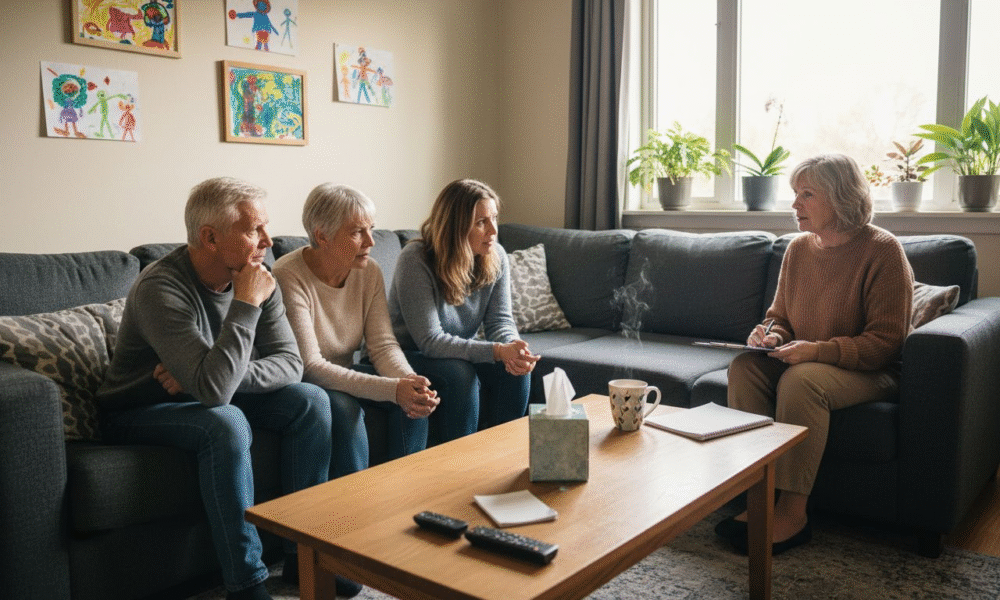
Every parent knows how quickly a simple family disagreement can turn into days of tension at home. Families in Bergen County often find themselves searching for ways to reconnect, especially when communication breaks down and conflicts feel impossible to resolve. Setting family goals together creates a strong foundation for healing, offering each member a chance to share, listen, and build clear steps for lasting improvement.
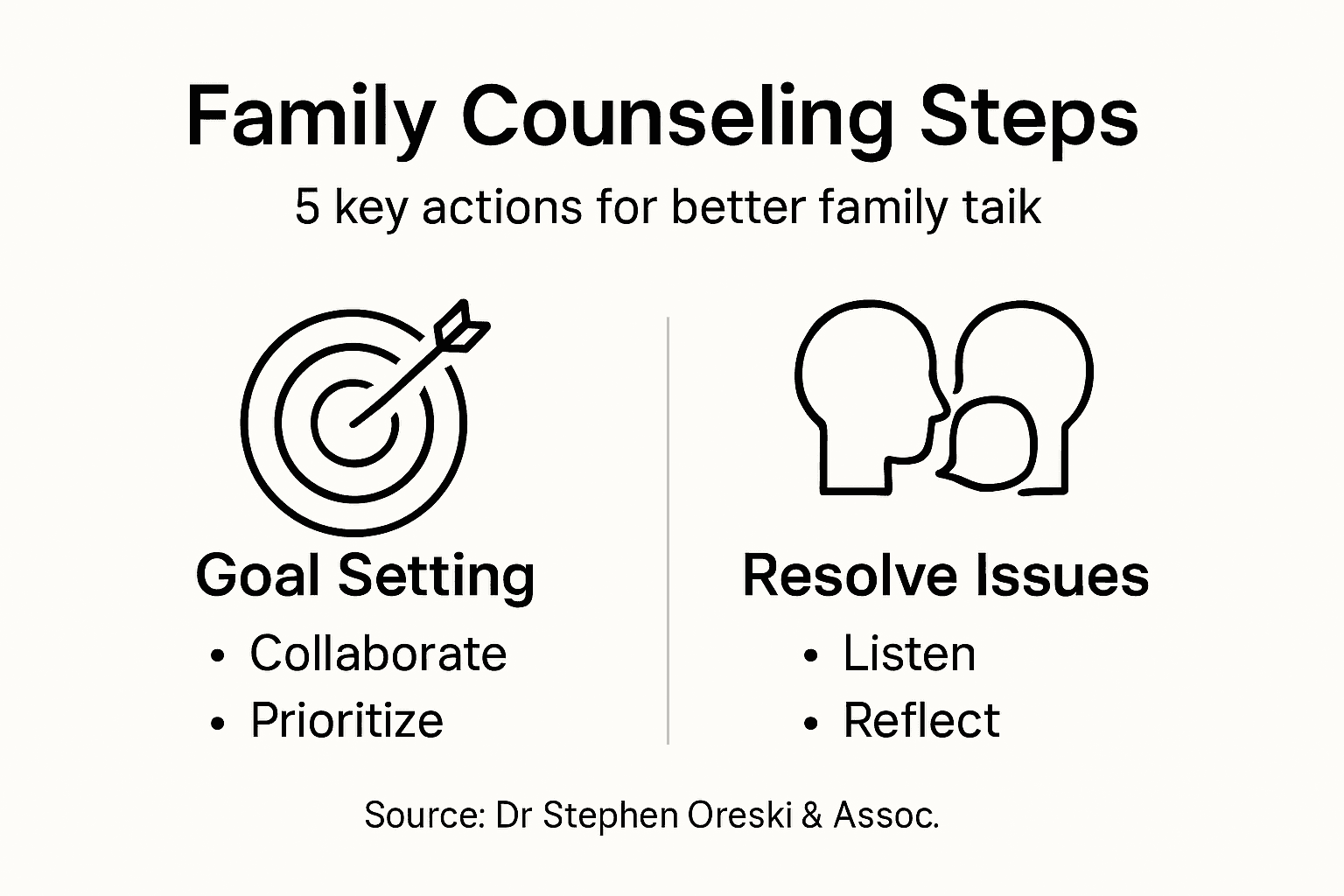
5 Practical Family Counseling Steps for Lasting Change
- Step 1: Set Family Counseling Goals Together
- Step 2: Choose a Comfortable Counseling Environment
- Step 3: Establish Open and Respectful Communication
- Step 4: Apply Active Listening and Conflict Resolution
- Step 5: Review Progress and Celebrate Successes
Quick Summary
| Key Insight | Explanation |
|---|---|
| 1. Set Collaborative Goals | Involve all family members in creating clear, measurable goals for effective communication. |
| 2. Choose a Supportive Environment | Select a confidential and comfortable setting for counseling that encourages open dialogue. |
| 3. Foster Open Communication | Use active listening techniques and ground rules to ensure every family member feels heard. |
| 4. Implement Conflict Resolution | Focus on understanding emotions and using structured approaches to navigate disagreements. |
| 5. Review Progress Together | Regularly assess improvements and celebrate successes as a family to maintain positive growth. |
Step 1: Set Family Counseling Goals Together
Successful family counseling starts with establishing clear, collaborative goals that every family member can understand and support. This crucial first step helps create a shared roadmap for healing and growth.
To set effective family counseling goals, begin by scheduling a dedicated family meeting where everyone feels comfortable speaking openly. During this meeting, each family member should have an opportunity to share their perspective on current communication challenges and personal hopes for improvement. Some key discussion points might include:
- What specific communication issues are creating tension?
- What does each person want to change about family interactions?
- What positive outcomes do you hope to achieve through counseling?
Effective goal setting requires active listening and genuine respect for every family member’s viewpoint.
As you discuss potential goals, focus on creating measurable and realistic objectives. For example, instead of a vague goal like “communicate better,” define specific actions such as “have weekly family dinners without digital distractions” or “practice using ‘I’ statements when discussing sensitive topics.”
Consider working with a professional counseling approach that can help guide your goal-setting process and provide structured techniques for improvement. A therapist can offer neutral mediation and help translate individual perspectives into collective strategies.
Remember that goal setting is an ongoing process. Be prepared to reassess and adjust your objectives as your family grows and changes.
Pro tip:Write down your family goals and place them somewhere visible as a constant reminder of your shared commitment to improvement.
Step 2: Choose a Comfortable Counseling Environment
Selecting the right counseling environment is a critical step in ensuring your family feels safe, supported, and ready to engage in meaningful therapeutic conversations. The physical and emotional space where counseling takes place can significantly impact your family’s willingness to open up and work through challenges.
When choosing a comfortable counseling environment, consider several key factors that contribute to a sense of safety and openness. These include:
- Location privacy that feels secure and confidential
- Neutral, welcoming physical space with comfortable seating
- Minimal external distractions
- Accessible and convenient for all family members
- Potential options for in-person or virtual sessions
A truly supportive counseling environment allows every family member to feel heard, respected, and validated.
Your chosen environment should accommodate different communication styles and comfort levels. Some families might prefer professional counseling settings that offer structured support, while others might benefit from more flexible arrangements like virtual sessions that reduce potential tension associated with physical proximity.
Additionally, discuss with your chosen therapist about potential environmental adaptations. Some counselors specialize in creating safe therapeutic spaces that help families feel more relaxed and willing to engage authentically. This might involve adjusting seating arrangements, using calming visual elements, or creating a non-threatening atmosphere that encourages open dialogue.
Pro tip:Request a brief preliminary consultation to assess the counseling environment and ensure it feels comfortable for all family members before committing to full sessions.
Here is a comparison of in-person and virtual counseling environments to help your family decide what may suit you best:
| Aspect | In-Person Counseling | Virtual Counseling |
|---|---|---|
| Privacy | Private, controlled space | Requires digital security |
| Convenience | Travel required | Accessible from home |
| Comfort Level | Neutral environment | Familiar surroundings |
| Distraction Level | Minimal distractions | Household interruptions risk |
| Adaptability | Therapist adjusts setting | Flexible with tech options |
Step 3: Establish Open and Respectful Communication
Effective family communication is the cornerstone of building stronger, more understanding relationships. This step focuses on creating an environment where every family member feels heard, validated, and respected, transforming potential conflicts into opportunities for genuine connection.
To establish open and respectful communication, start by implementing active listening techniques that go beyond simply hearing words. These techniques include:
- Maintaining eye contact
- Avoiding interruptions
- Asking clarifying questions
- Reflecting back what you’ve heard
- Showing genuine empathy and understanding
True communication happens when we listen to understand, not just to respond.
Creating a safe communication space requires intentional practice. Improving communication skills involves setting ground rules that everyone agrees to follow. These might include speaking without judgment, using “I” statements to express feelings, and committing to respectful dialogue even during disagreements.
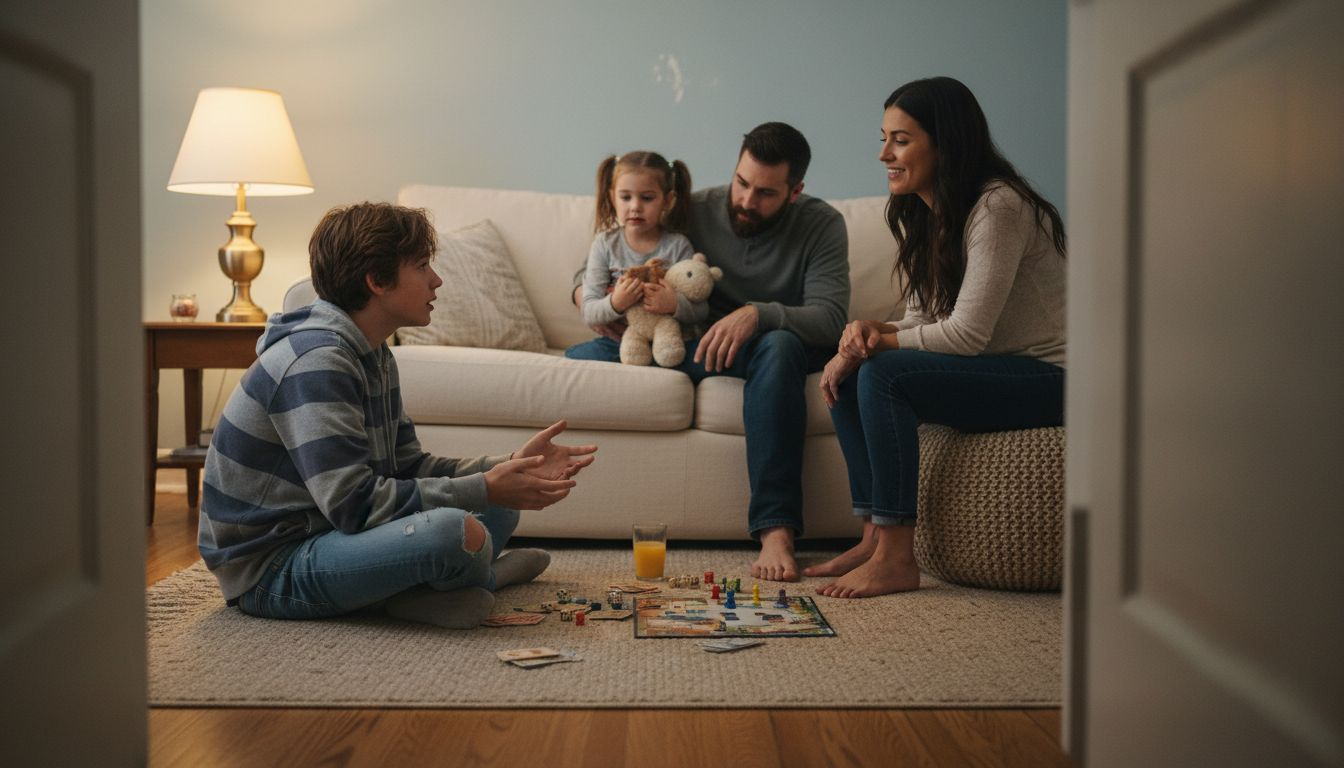
Nonverbal communication plays an equally important role in establishing openness. Pay attention to your body language, tone of voice, and emotional presence. Nonverbal cues often communicate more than words themselves. Practice being physically and emotionally present during family conversations, putting away electronic devices and creating dedicated time for meaningful interactions.
Pro tip:Schedule regular family meetings where everyone takes turns speaking and listening, rotating the discussion leader to ensure equal participation and respect.
Step 4: Apply Active Listening and Conflict Resolution
Mastering active listening and conflict resolution skills transforms family dynamics from potential battlegrounds into spaces of understanding and mutual respect. These powerful communication techniques help families navigate disagreements constructively and build deeper, more meaningful connections.
To apply active listening effectively, focus on fully engaging with each speaker. Critical techniques include:
- Maintaining undivided attention
- Removing distracting electronic devices
- Using open body language
- Avoiding defensive reactions
- Practicing patience during challenging conversations
Genuine listening is an act of love that creates space for healing and understanding.
When conflicts arise, conflict resolution strategies become essential. Start by acknowledging each person’s feelings without judgment, using techniques like reflecting back what you’ve heard and asking clarifying questions. Validate emotions before problem-solving, which helps family members feel heard and respected.
Implement a structured approach to resolving disagreements by focusing on shared interests rather than individual positions. This means moving beyond winning an argument to finding solutions that work for everyone. Practice using “I” statements to express feelings without blaming, and create an environment where each family member feels safe sharing their perspective without fear of criticism or retaliation.
Pro tip:Practice the “pause and reflect” technique by taking a deep breath and counting to three before responding during emotionally charged conversations.
Step 5: Review Progress and Celebrate Successes
Tracking family counseling progress is a critical component of creating lasting positive change, transforming therapeutic work from an abstract process into tangible, meaningful growth. This step helps your family recognize achievements, reinforce positive communication patterns, and maintain momentum toward your shared goals.
To effectively review progress, establish clear measurement strategies that allow everyone to participate. These might include:
- Tracking specific communication improvements
- Noting reduced conflict frequency
- Documenting emotional connection milestones
- Reflecting on individual and collective growth
- Identifying positive behavioral shifts
Small victories create the foundation for significant transformational change.
Counseling progress evaluation requires honest, compassionate reflection. Schedule regular family meetings where each member can share their perspective on recent improvements, challenges overcome, and personal insights gained through the counseling process. Approach these reviews without judgment, focusing on collective support and encouragement.
Celebrating successes isn’t just about grand gestures. Sometimes the most meaningful acknowledgments are simple: a heartfelt compliment, a shared moment of laughter, or recognizing someone’s effort to communicate differently. Create rituals that mark your family’s progress, whether through special dinners, shared activities, or symbolic tokens that represent your collective journey.
Pro tip:Create a “Family Growth Journal” where you document positive moments, communication breakthroughs, and milestones to remind yourselves of how far you’ve come.
This summary table highlights examples of how family progress can be measured over time:
| Progress Indicator | How to Track | Why It Matters |
|---|---|---|
| Fewer Arguments | Count reductions weekly | Shows improved conflict skills |
| Positive Feedback Given | Note compliments exchanged | Reflects increased support |
| Active Participation | Meeting attendance logs | Signals engagement in process |
| Emotional Sharing | Journal emotional updates | Reveals greater trust |
| Goal Achievement | Check off milestones | Demonstrates lasting growth |
Strengthen Your Family Bonds with Expert Guidance
Struggling to improve communication and resolve conflicts within your family can feel overwhelming. This article highlights how setting clear counseling goals, choosing the right environment, and applying active listening can transform tension into understanding and trust. If your family seeks to build respectful dialogue, reduce disputes, and celebrate progress together now is the perfect time to take action.
Discover personalized support through our Family Therapy Archives – Dr. Stephen Oreski & Associates where experienced therapists help Bergen County families navigate these challenges. Begin your journey by exploring Family Archives – Dr. Stephen Oreski & Associates for insights and tips then secure a free consultation at https://bergencountytherapist.com. Take the first step toward lasting positive change today.
Frequently Asked Questions
How can we set effective family counseling goals together?
Successful family counseling goals should be collaborative and clear. Schedule a family meeting where all members can discuss communication challenges and hopes for improvement. Focus on creating measurable goals, such as having weekly family dinners without distractions, to track your progress.
What should we consider when choosing a counseling environment?
Select a counseling environment that feels safe and comfortable for everyone. Factors to consider include privacy, a welcoming space, minimal distractions, and whether to meet in-person or virtually. Prioritize an environment that accommodates different comfort levels and communication styles.
How can we improve our communication during family counseling?
Establishing open and respectful communication is crucial for building stronger family relationships. Implement active listening techniques, such as maintaining eye contact and avoiding interruptions, during family discussions. Schedule regular meetings where each family member can share their thoughts to encourage equal participation.
What conflict resolution strategies can we apply in family counseling?
Use active listening and validate each family member’s feelings during conflicts. Acknowledge emotions without judgment, and practice using “I” statements to express feelings without blaming others. This approach helps create a constructive dialogue and fosters mutual respect among family members.
How do we track our progress in family counseling?
Establish clear measurement strategies to track your family counseling progress. Set regular family meetings to discuss communication improvements and any challenges overcome, focusing on small victories to maintain motivation. Documenting these reflections can help reinforce positive changes over time.
Recommended
- Guía paso a paso terapia familiar para mejorar relaciones
- Communication Tips for Couples in Recovery – Dr. Stephen Oreski & Associates
- Master the Parent-Child Therapy Process for Lasting Family Bonds – Dr. Stephen Oreski & Associates
- Guía para terapia familiar: resuelve conflictos paso a paso
- Vodnik po sistemski družinski terapiji za izboljšanje družinske dinamike