

Losing someone important can leave Bergen County adults feeling stuck in a cycle of sadness, frustration, or numbness that regular conversations just cannot fix. Many people find that grief therapy gives targeted support that gently addresses both the pain and confusion of loss, rather than just brushing feelings aside. Whether your experience with grief is new or deeply complicated, exploring different therapy options can help you build lasting emotional resilience and move toward genuine healing.
Table of Contents
- What Grief Therapy Really Means
- Major Types of Grief Therapy Approaches
- Individual Vs. Group Therapy For Grief
- Benefits And Effectiveness Of Each Method
- Choosing The Right Grief Therapist
Key Takeaways
| Point | Details |
|---|---|
| Focus of Grief Therapy | Grief therapy specifically addresses the intense emotions of loss and helps individuals process their grief through structured interventions. |
| Variety of Approaches | Different therapeutic methods, like Complicated Grief Therapy and Cognitive Behavioral Therapy, offer unique strategies for coping with grief. |
| Individual vs. Group Therapy | Choosing between individual and group therapy depends on personal needs; both can be effective in managing grief symptoms. |
| Selecting a Therapist | Finding a qualified grief therapist is essential for effective support; prioritize professionals with specialized training and empathetic approaches. |
What Grief Therapy Really Means
Grief therapy represents a specialized therapeutic approach designed to help individuals navigate the complex emotional landscape of loss. Unlike standard counseling, grief therapy focuses specifically on processing intense feelings associated with bereavement, providing targeted support for those experiencing profound emotional distress after losing a loved one.
At its core, grief therapy is a structured intervention aimed at helping individuals understand and work through their unique grief experience. The primary goals involve:
- Validating the individual’s emotional experience
- Reducing complicated grief symptoms
- Developing healthy coping mechanisms
- Restoring functional emotional processing
- Creating meaningful narratives around loss
Traditional therapeutic approaches like Complicated Grief Therapy (CGT) and Cognitive Behavioral Therapy (CBT) offer specialized techniques to address grief’s multifaceted challenges. These methods help individuals transform overwhelming emotions into constructive healing pathways, encouraging acceptance and personal growth through structured psychological interventions.
Grief therapy is not about forgetting loss, but learning to carry that loss in a way that allows continued emotional growth and connection.
The therapeutic process typically involves exploring deep-seated emotions, confronting painful memories, and gradually reconstructing personal meaning after significant loss. Therapists work collaboratively with clients to develop personalized strategies that honor their unique grieving experience while promoting psychological resilience.

Pro tip:When seeking grief therapy, prioritize finding a therapist specializing in bereavement counseling who can provide compassionate, evidence-based support tailored to your specific emotional needs.
Major Types of Grief Therapy Approaches
Grief therapy encompasses multiple specialized approaches designed to address the complex emotional challenges individuals experience after significant loss. Group grief counseling represents one powerful method that allows individuals to process their emotions alongside others who have undergone similar experiences.
The primary grief therapy approaches include:
- Complicated Grief Therapy (CGT): A structured intervention focusing on processing intense grief and restoring daily functioning
- Cognitive Behavioral Therapy (CBT): Targets maladaptive thoughts and behaviors related to loss
- Meaning in Loss (MIL) Therapy: Helps individuals create meaningful narratives around their grief experience
- Narrative Therapy: Encourages individuals to reconstruct personal stories and integrate loss
- Family Bereavement Programs: Supports entire family systems through collective healing
Each therapeutic approach offers unique strategies for addressing different grief manifestations. Cognitive Behavioral Therapy, for instance, helps individuals identify and transform negative thought patterns that emerge after loss, while Meaning in Loss therapy focuses on constructing adaptive interpretations of traumatic experiences.
Here’s a quick comparison of the main grief therapy approaches and their unique characteristics:
| Approach | Focus Area | Typical Techniques | Best For |
|---|---|---|---|
| CGT | Processing complicated grief | Structured sessions, exposure | Intense, prolonged grief |
| CBT | Changing negative thoughts | Thought reframing, behavior change | Grief with anxiety or depression |
| MIL Therapy | Finding meaning in loss | Storytelling, reframing events | Searching for purpose after loss |
| Narrative Therapy | Reconstructing personal stories | Guided narration, reflection | Integrating loss into life narrative |
| Family Bereavement | Collective healing | Family sessions, systemic support | Families facing shared grief |
Effective grief therapy is not about eliminating pain, but about learning to carry grief in a way that promotes healing and personal growth.
The selection of an appropriate grief therapy approach depends on individual needs, personal history, and the specific nature of the loss. Therapists typically conduct comprehensive assessments to recommend the most suitable intervention strategy, ensuring personalized and compassionate support throughout the healing process.
Pro tip:When exploring grief therapy options, be open to trying different approaches and remember that healing is a unique, non-linear journey that requires patience and self-compassion.
Individual vs. Group Therapy for Grief
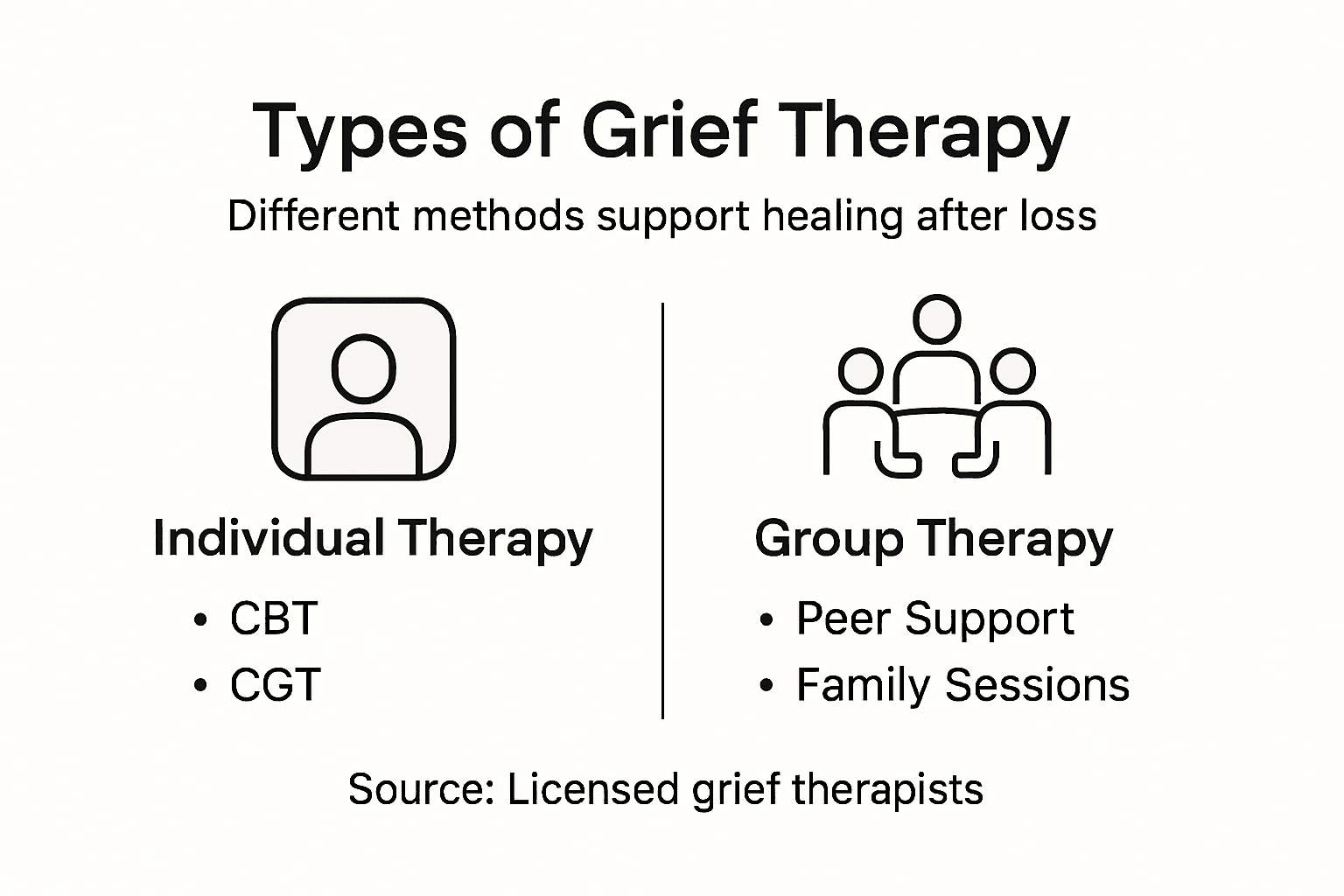
Choosing between individual and group grief therapy is a deeply personal decision that depends on an individual’s emotional needs, comfort level, and healing journey. Understanding how group therapy works can help individuals make more informed choices about their therapeutic approach.
Key differences between individual and group grief therapy include:
Individual Therapy:
- One-on-one personalized attention
- Deeply private and confidential setting
- Tailored strategies addressing specific personal experiences
- Intensive focus on individual emotional processing
Group Therapy:
- Shared experiences with others experiencing similar losses
- Opportunity for collective healing and support
- Lower cost compared to individual sessions
- Reduced feelings of isolation
Recent clinical research suggests that both formats can be equally effective in managing grief symptoms. Cognitive behavioral grief-focused therapies demonstrate comparable outcomes whether delivered individually or in group settings, with group formats offering additional benefits of social support and cost-effectiveness.
To help you choose, here’s a summary of how individual and group therapy formats differ in their experience and benefits:
| Therapy Format | Privacy Level | Peer Support | Affordability | Ideal For |
|---|---|---|---|---|
| Individual | Completely private | Not present | Higher cost | Personalized, deep work |
| Group | Shared environment | Strong presence | Lower cost | Social support, reducing isolation |
The most effective grief therapy is not about the format, but about finding a supportive environment that allows genuine emotional exploration and healing.
The choice between individual and group therapy often depends on personal preferences, emotional readiness, and specific grief experiences. Some individuals might start with group therapy to feel less isolated, while others might prefer the privacy and focused attention of individual counseling. Many therapists recommend a flexible approach that can incorporate elements from both formats.
Pro tip:Consider starting with a consultation that helps you understand which therapeutic approach might best suit your unique grief journey and emotional needs.
Benefits and Effectiveness of Each Method
Psychotherapeutic approaches to grief management offer diverse strategies for healing, with each method presenting unique advantages in supporting emotional recovery. Understanding the nuanced effectiveness of grief counseling can help individuals make more informed treatment decisions.
Benefits of different grief therapy approaches include:
Individual Therapy Benefits:
- Deeply personalized emotional exploration
- Confidential and intimate healing environment
- Customized therapeutic strategies
- One-on-one professional guidance
Group Therapy Benefits:
- Normalized grief experiences
- Shared emotional support
- Reduced feelings of isolation
- Peer learning and perspective sharing
Meta-analyses and systematic research demonstrate that structured grief interventions significantly improve psychological adaptation and symptom reduction. Short-term, focused therapies—particularly cognitive-behavioral and exposure-based approaches—have shown consistently robust outcomes across various grief contexts.
The most powerful healing occurs when therapeutic methods are tailored to individual emotional landscapes, not confined by rigid treatment protocols.
Research indicates that treatment effectiveness depends on multiple factors, including therapy type, timing of intervention, individual psychological characteristics, and the nature of the loss experienced. Some individuals respond better to individual counseling, while others find tremendous healing in group settings.
Pro tip:Consider requesting a comprehensive assessment from a grief specialist to determine which therapeutic approach aligns most closely with your unique emotional needs and healing trajectory.
Choosing the Right Grief Therapist
Selecting a grief therapist is a critical step in your healing journey, requiring careful consideration and thoughtful evaluation. Finding the right grief therapist involves understanding the unique qualifications and approaches that make a professional truly effective in supporting emotional recovery.
Key considerations when choosing a grief therapist include:
Professional Qualifications:
- Licensed mental health professional
- Specialized training in grief counseling
- Ongoing professional development
- Evidence of empathy and emotional intelligence
Therapeutic Expertise:
- Experience with specific types of loss
- Understanding of cultural grief dynamics
- Proficiency in multiple therapeutic approaches
- Ability to customize treatment strategies
Different mental health professionals offer varying approaches to grief support. Psychiatrists can provide medication management, psychologists specialize in evidence-based therapies, counselors offer talk therapy, and grief coaches provide practical emotional support. The right choice depends on individual needs, loss context, and personal comfort level.
Effective grief therapy transcends credentials—it’s about finding a compassionate professional who can genuinely understand and support your unique healing journey.
Professional competence in grief counseling involves more than academic credentials. The most skilled therapists demonstrate deep emotional awareness, cultural sensitivity, and the ability to create a safe, non-judgmental space for exploring complex grief experiences.
Pro tip:Schedule initial consultations with multiple therapists to assess their approach, ensuring you find a professional who feels genuinely supportive and aligned with your emotional needs.
Find the Right Path to Healing With Expert Grief Therapy
Navigating the complex journey of grief after a significant loss can feel overwhelming. This article explored various types of grief therapy such as Complicated Grief Therapy and Cognitive Behavioral Therapy, highlighting the importance of finding an approach that fits your unique emotional needs. Many individuals struggle with intense feelings, isolation, or difficulty making meaning of their loss. At Bergen County Therapist, we understand these struggles and offer personalized support to help you process grief at your own pace.

If you are ready to take a step toward healing, explore our dedicated Grief Archives to learn more about specialized therapeutic options. Our compassionate team, led by Dr. Stephen Oreski, is committed to guiding you through evidence-based therapies tailored to your situation. Reach out today for a free consultation to begin your journey toward renewed hope and emotional resilience. Visit https://bergencountytherapist.com to connect with a grief therapist who can help you find meaningful healing.
Frequently Asked Questions
What are the main types of grief therapy approaches?
Grief therapy includes several approaches such as Complicated Grief Therapy (CGT), Cognitive Behavioral Therapy (CBT), Meaning in Loss (MIL) Therapy, Narrative Therapy, and Family Bereavement Programs. Each approach offers distinct strategies to address the emotional challenges associated with loss.
How do individual and group grief therapy differ?
Individual grief therapy offers personalized, one-on-one attention and confidentiality, focusing on specific emotional needs. In contrast, group therapy provides a supportive environment where individuals can share experiences with others who have faced similar losses, promoting collective healing and reducing feelings of isolation.
What are the benefits of cognitive-behavioral therapy for grief?
Cognitive Behavioral Therapy (CBT) helps individuals identify and reshape negative thought patterns related to their loss. This method can reduce symptoms of anxiety and depression that often accompany grief, facilitating a healthier emotional adjustment and coping mechanism.
How can I choose the right grief therapist for my needs?
When selecting a grief therapist, consider their professional qualifications, experience with loss, and therapeutic approach. It’s essential to find a compassionate professional who aligns with your emotional needs and can provide a supportive and personalized healing experience.