

A codependent friendship is an imbalanced relationship where one person consistently plays rescuer while the other remains dependent, and both lose themselves in the process. The giver/taker dynamic is the defining feature: one friend is regularly in crisis, the other is always listening and fixing. Personal boundaries blur, guilt replaces honest communication, and the friendship starts to feel less like a choice and more like an obligation neither person knows how to escape.
Key markers of a codependent friendship include:
- Emotional enmeshment: Both people’s moods and identities become tangled together, making it hard to know where one person ends and the other begins.
- Inability to say no: Declining a request triggers anxiety, guilt, or fear that the friendship will fall apart.
- One-sided support: The giver consistently meets the taker’s needs while their own go unacknowledged.
- Blurred personal boundaries: Neither person wants to risk upsetting the other, so weak boundaries become the norm rather than the exception.
Table of Contents
- What are the signs of a codependent friendship?
- How do codependent friendships affect you emotionally?
- What can you actually do about a codependent friendship?
- What does a codependent friendship actually look like?
- Key Takeaways
- FAQ
What are the signs of a codependent friendship?
Recognizing the pattern is harder than it sounds, especially when the culture celebrates “ride or die” friendships. These are the clearest behavioral signals to watch for.
-
Constant crisis from one friend. One person is perpetually overwhelmed, and the other is perpetually on call. The rescuing friend rearranges their schedule, cancels plans, and absorbs the emotional weight every time.
-
Relying on the friend for self-worth. When your sense of okayness depends on one person’s approval, you’ve crossed from valuing a friendship into needing their validation to function. Therapist Sharon Martin, LCSW, describes it as depending on someone else to tell you what’s okay rather than trusting your own instincts.
-
Giving up other relationships and interests. Codependency often means dropping hobbies, canceling plans with other friends, or abandoning activities because the primary friend doesn’t share them or simply disapproves.
-
Emotional exhaustion and resentment in the giver. The giving friend starts to feel burned out, quietly resentful, and frustrated that nothing changes despite their efforts. Compassion fatigue sets in, and other people in their life may notice the enmeshment before they do.
-
Jealousy and possessiveness over time and attention. A little FOMO is human. But when a friend’s time with someone else feels like a personal betrayal, that’s a different problem entirely. Entitlement to exclusive attention is a clear marker of codependency, not closeness.
-
Avoiding conflict at all costs. Early signs often include oversharing too soon or steering clear of any difficult conversation to protect the friendship’s fragile balance. Both behaviors accelerate enmeshment.
-
Shared emotions without separation. If your friend is anxious, you’re anxious. If they’re devastated, you can’t function either. That emotional mirroring, when it’s constant and involuntary, signals a loss of individual identity.
How do codependent friendships affect you emotionally?
The psychological cost of these friendships tends to build slowly, which is exactly why they’re so hard to leave.
- Loss of individuality. Codependent people get so absorbed in helping that fixing others becomes their identity. As one pattern described by codependency researchers notes, the relationship isn’t a clinical diagnosis but a dysfunctional pattern often rooted in childhood experiences and low self-esteem.
- Loneliness inside the friendship. This one surprises people. Psychotherapist Sharon Martin notes that codependents can feel terrifyingly alone even within the relationship, because their own needs are never actually met.
- Guilt and fear around independence. Healthy friendships allow both people to disagree, take space, and maintain outside relationships without anxiety. Codependent ones treat independence as a threat.
- Compassion fatigue. The giver friend absorbs so much emotional weight that they eventually burn out, sometimes without realizing why they feel so depleted.
The line between healthy interdependence and codependency: Healthy friends lean on each other and give back in turn. Codependent friends operate on a fixed giver/taker axis that rarely shifts. The difference between dependence and codependency comes down to whether both people retain their own identity, autonomy, and emotional needs within the friendship.
Codependency can also deepen over time. Without some kind of intervention, the dynamic tends to worsen as both people become more entrenched in their roles, and either the friendship eventually breaks down or one person hits a wall.
What can you actually do about a codependent friendship?
Change is possible, but it starts with your own behavior, not your friend’s.
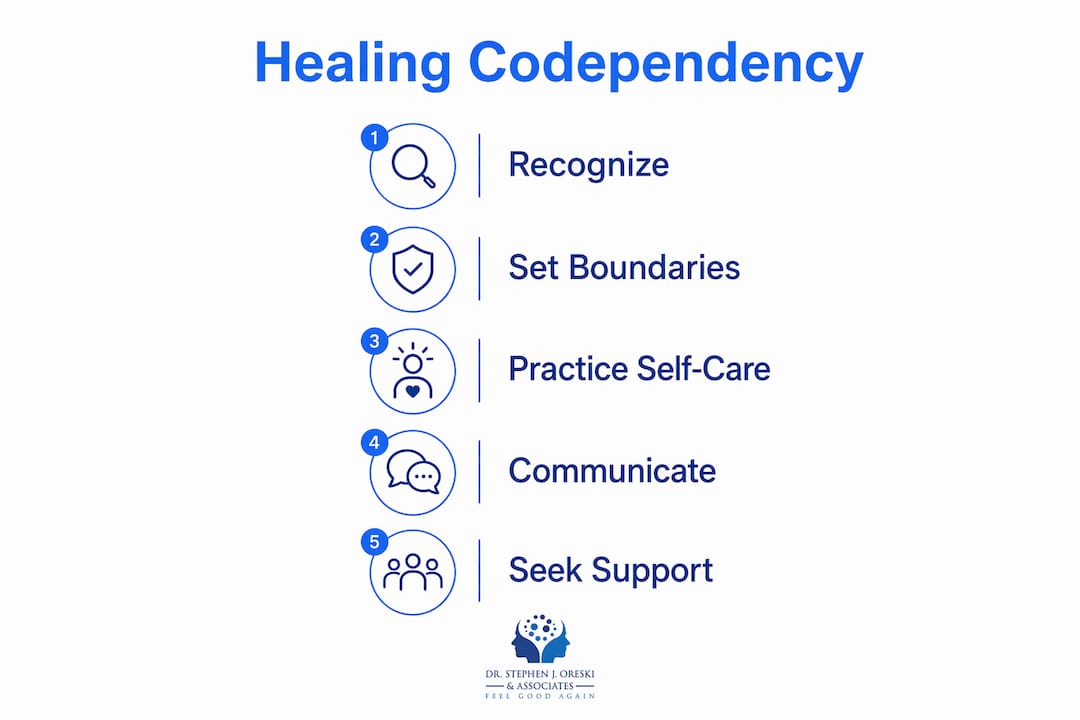
- Set and hold boundaries. Saying no, taking space, and refusing to enable the other person’s dependence are the concrete actions that shift the dynamic. Setting healthy boundaries on your giving is the most direct lever you have.
- Encourage independence, don’t just enable. Resist the urge to fix every problem. Letting your friend experience natural consequences, rather than swooping in, gives them room to grow.
- Prioritize your own needs. Identify what you actually want and need from a friendship. Codependent givers often have no clear answer to that question because they’ve spent so long focused outward.
- Stop trying to change your friend directly. Coaching or confronting a codependent friend often feels controlling and backfires. Focus on your own behavior first.
- Build a life outside the friendship. Attend a class alone, reconnect with other friends, pick up an interest you dropped. Independence on your end naturally reduces the pressure on the friendship.
- Seek professional therapy or a support group. Therapists provide tools to address root causes, work through guilt, and rebuild a sense of identity. Codependency recovery groups offer community with people navigating the same patterns.
Pro Tip: Don’t wait for your friend to change before you start. When you shift your own boundaries and behaviors, the entire direction of the friendship changes on its own, sometimes for the better, sometimes toward a natural end. Either outcome is healthier than staying stuck.
What does a codependent friendship actually look like?

Two real-world patterns show up repeatedly in clinical settings.
The perpetual rescuer. One friend calls in crisis every few days: a bad breakup, a work disaster, a family conflict. The other drops everything, talks for hours, and offers solutions. Over months, the rescuing friend stops mentioning their own problems because there’s never space. They start dreading the phone ringing. When they finally try to pull back, the dependent friend reacts with hurt or anger, and the rescuer caves out of guilt. This is the giver/taker dynamic in its clearest form.
The identity merger. Two friends spend nearly all their free time together, share the same social circle, and gradually stop pursuing separate interests. One friend begins checking in before making any decision, from weekend plans to career choices. The other feels flattered at first, then quietly suffocated. When the more independent friend tries to spend time with someone new, the other interprets it as abandonment. Jealousy, guilt-tripping, and possessiveness follow. Neither person set out to create this dynamic, but low self-esteem and fear of abandonment drove it there gradually.

Both patterns share the same core: one person’s emotional needs have quietly taken over the friendship, and the other person has let their own identity shrink to accommodate it.
Key Takeaways
A codependent friendship erodes both people’s sense of self, and the path out runs through your own boundaries, not your friend’s behavior.
| Point | Details |
|---|---|
| Core definition | One friend consistently rescues while the other depends, with blurred boundaries and emotional enmeshment. |
| Clearest warning sign | Giving up other relationships, interests, or your own needs to center one friendship. |
| Emotional cost | Givers experience compassion fatigue, loneliness, and resentment; takers avoid personal growth. |
| First step to change | Set and hold your own boundaries rather than trying to fix or coach your friend. |
| When to get help | Therapy addresses root causes like low self-esteem and fear of abandonment that sustain the pattern. |
FAQ
Is a codependent friendship toxic?
It can be, yes. Codependent friendships harm both people: the giver experiences emotional exhaustion and resentment, while the taker avoids the personal growth they need. Whether it becomes fully toxic depends on how entrenched the pattern is and whether either person is willing to change.
How do you become less codependent in a friendship?
Start by identifying your own needs and practicing saying no without over-explaining. Build independence by investing in other relationships and interests, and consider working with a therapist to address the underlying fear of abandonment or low self-esteem that often drives codependent behavior.
What can be mistaken for codependency?
Social anxiety and FOMO are commonly confused with codependency. The real distinction is resentment: feeling entitled to a friend’s exclusive attention, or experiencing their time with others as a personal betrayal, signals codependency rather than ordinary social anxiety.
What should you do if your friend is in a codependent relationship?
Speak up honestly, but focus on what you’ve observed rather than labeling their behavior. Encourage them to seek professional support and avoid enabling the dynamic yourself by maintaining your own boundaries within the friendship.