

Feeling invisible scars after the end of a relationship is common for many Bergen County residents. Emotional abuse often goes unnoticed because it leaves no physical marks, yet the impact on your confidence and sense of self can be profound. Understanding the pattern of deliberate, repeated non-physical behaviors is a crucial step toward recognizing what you have experienced. This guide helps clarify emotional abuse, debunk myths, and introduce pathways to healing through professional support.
Table of Contents
- Defining Emotional Abuse and Common Myths
- Different Types of Emotional Abuse
- Recognizing Warning Signs and Patterns
- Long-Term Effects on Mental and Emotional Health
- Seeking Help and Therapeutic Recovery Options
Key Takeaways
| Point | Details |
|---|---|
| Understanding Emotional Abuse | Emotional abuse involves a pattern of non-physical behaviors aimed at control and manipulation, impacting self-esteem and emotional strength. |
| Recognition of Myths | Common misconceptions, like the belief that real abuse is only physical, hinder survivors from acknowledging their experiences as abuse. |
| Types of Emotional Abuse | Recognizing different forms of emotional abuse, such as gaslighting and isolation, is crucial for understanding its effects. |
| Importance of Professional Help | Therapy is essential for recovery, offering specialized strategies to heal from the long-term psychological effects of emotional abuse. |
Defining Emotional Abuse and Common Myths
Emotional abuse is a pattern of deliberate, repeated non-physical behaviors designed to control, isolate, or frighten someone. Unlike physical abuse, it leaves no bruises or visible injuries—but the psychological damage cuts deep.
The core behaviors include:
- Verbal attacks, insults, and constant criticism
- Threats, intimidation, and deliberate humiliation
- Manipulation, gaslighting, and emotional exploitation
- Isolation from friends, family, and support systems
- Dismissiveness that makes your feelings seem invalid
These actions target your self-esteem, confidence, and emotional strength. Over time, they create a psychological dependency where you start questioning your own reality and worth.
What Makes Emotional Abuse So Difficult to Recognize
Emotional abuse thrives in invisibility. Unlike a black eye or broken bone, there’s no physical evidence to point to. Many survivors spend years wondering if what they experienced was “real abuse” because it didn’t leave marks.
The subtlety makes it particularly dangerous. It builds gradually, often starting with small comments or subtle dismissals that seem harmless at first. By the time you realize the pattern, you’ve already internalized the criticism and begun isolating yourself.
Emotional abuse doesn’t leave scars you can see, but it damages your mental health just as severely as physical violence—sometimes more so.
Common Myths About Emotional Abuse
Misunderstandings about emotional abuse keep survivors silent and isolated. Here are the myths that need to disappear:
Myth 1: “Real abuse is always physical.” Many people dismiss emotional abuse because it doesn’t involve hitting or physical force. This misconception leaves emotional abuse overlooked and minimized, allowing it to continue unchecked.
Myth 2: “It’s not that bad if there are no bruises.” Psychological damage is just as real. Bergen County residents who experienced 6 signs you may be in an abusive relationship often struggle with lasting trauma, anxiety, and depression that require professional treatment.
Myth 3: “They didn’t mean to hurt me.” Intent doesn’t erase impact. Whether intentional or not, the repeated harm to your mental well-being constitutes abuse.
Myth 4: “I could have prevented it.” This is the abuse speaking. You are not responsible for someone else’s choice to control or manipulate you.
These myths create shame and self-doubt, which is exactly what keeps people trapped in abusive situations.
Pro tip: If you’re questioning whether your experience counts as abuse, remember this: if someone’s behavior has left you feeling smaller, less confident, or more isolated, it warrants professional evaluation—reach out to discuss your specific situation in a free consultation.
Different Types of Emotional Abuse
Emotional abuse takes many forms, and understanding them helps you recognize what you’ve experienced. While each type damages you differently, they all serve the same purpose: to control, isolate, and diminish your sense of self.
Verbal Abuse and Constant Criticism
Verbal abuse uses words as weapons. This includes name-calling, insults, yelling, threats, and relentless criticism designed to degrade and demean you.
Constant criticism goes beyond offering feedback. It targets who you are, not what you do. Over time, you internalize these attacks and start believing them about yourself. A partner who constantly tells you that you’re worthless, stupid, or unlovable plants those beliefs deep in your mind.

Gaslighting and Reality Manipulation
Gaslighting is perhaps the most insidious form of emotional abuse. The abuser deliberately manipulates you into questioning your own memory, perception, and sanity.
Examples include:
- Denying things they clearly said or did
- Telling you “that never happened” when you know it did
- Insisting you’re “too sensitive” or “overreacting” to their harmful behavior
- Rewriting history to make themselves the victim
This creates confusion and anxiety. You stop trusting yourself and become dependent on the abuser to tell you what’s real.
Gaslighting makes you question your own mind, which is why it causes such deep psychological harm.
Isolation and Control
Isolation cuts you off from people and resources that could support you. The abuser controls who you see, where you go, and what you do.
Common controlling behaviors include:
- Forbidding contact with family and friends
- Monitoring your phone, emails, or social media
- Restricting financial independence
- Dictating what you wear or how you spend your time
- Creating conflict between you and your support network
This isolation makes you feel trapped and dependent on the abuser for validation and information.
Humiliation and Emotional Exploitation
Humiliation deliberately shames you in front of others or privately. Public embarrassment, mocking, or making fun of your appearance, abilities, or past creates deep shame.
Emotional exploitation uses your vulnerabilities against you. The abuser knows what hurts you and uses it intentionally. They may also withdraw affection, give silent treatment, or withhold emotional support as punishment.
Technology-Facilitated Abuse
Modern abuse happens online too. Cyber-bullying, monitoring apps, public shaming on social media, and threatening to share private information are forms of emotional abuse that extend into the digital world.
This type can feel inescapable because the harassment follows you everywhere.
Recognizing the Pattern
You may experience one type or several simultaneously. What matters is recognizing that emotional incest and boundary violations often co-exist with other forms of emotional abuse in relationships.
The pattern is what defines abuse—repeated, deliberate harm designed to maintain power and control over you.
Pro tip: Write down specific incidents of emotional abuse when they happen—date, what was said, how it made you feel—so you have concrete examples to discuss with a therapist and can validate your own experience.
Recognizing Warning Signs and Patterns
Emotional abuse rarely announces itself. It starts small—a criticism that stings, a comment that makes you question yourself—then escalates gradually. By the time you realize what’s happening, the pattern is already woven into your daily life.
Recognizing the warning signs is your first step toward getting help.
Early Warning Signs
Abuse often begins subtly. You might not notice it’s abuse at first because it doesn’t look violent or dramatic.
Watch for these early signals:
- Constant put-downs disguised as jokes or “just being honest”
- Excessive jealousy and accusations of cheating without cause
- Frequent criticism of your appearance, intelligence, or abilities
- Controlling behavior about what you wear, where you go, or who you see
- Comments that make you feel small or ashamed of yourself
- Telling you that you’re “too sensitive” when you express hurt
These might seem minor in isolation, but patterns matter. One critical comment is harsh. Dozens of them reshape how you see yourself.
The Escalation Pattern
Emotional abuse follows a predictable trajectory. It starts subtly and escalates over time, becoming more controlling and humiliating as the abuser gains power over you.
The progression typically looks like this:
- Subtle insults and put-downs feel like normal conversation
- Criticism becomes constant and targets who you are
- Controlling behaviors increase (monitoring, isolation, restrictions)
- Gaslighting intensifies (denying what happened, making you question reality)
- Humiliation deepens (public shaming, degrading acts, threats)
Each stage chips away at your independence and self-worth until you’re dependent on the abuser.
Abuse escalates gradually so you adjust to it slowly—by the time you realize how bad it’s gotten, you’re already deeply trapped.
Behavioral Red Flags You Need to Know
Certain behaviors are direct indicators of emotional abuse. Pay attention if someone:
- Isolates you from family, friends, and support systems
- Restricts access to money, transportation, or communication
- Threatens harm to you, themselves, or people you care about
- Blames you for their abusive behavior (“You made me do this”)
- Shows extreme jealousy and accuses you of infidelity constantly
- Demands degrading acts or humiliates you privately or publicly
- Wakes you repeatedly or denies you sleep as punishment
- Guilt-trips you into accepting their behavior
These aren’t relationship problems. These are abuse tactics designed to control you.
Patterns in Your Relationship
Look for recurring cycles in your relationship. Does your partner:
- Say hurtful things, then apologize and promise to change, then repeat the cycle?
- Make you feel crazy for reacting normally to their harmful behavior?
- Isolate you gradually so you have fewer people to talk to?
- Create situations where you feel dependent on them for basic needs?
These patterns are the signature of emotional abuse. They’re not accidents. They’re strategies.
Why Recognizing Patterns Matters
Understanding the warning signs of toxic relationships helps you validate your experience and take action. You might be experiencing something so normal to you that you’ve stopped seeing it as harmful.
Recognition is power. Once you see the pattern, you can’t unsee it. And once you see it, you can do something about it.
Pro tip: Keep a private journal documenting patterns you notice—not to confront your partner, but to build clarity for yourself and to share with a therapist who can help you understand what you’re experiencing.
Long-Term Effects on Mental and Emotional Health
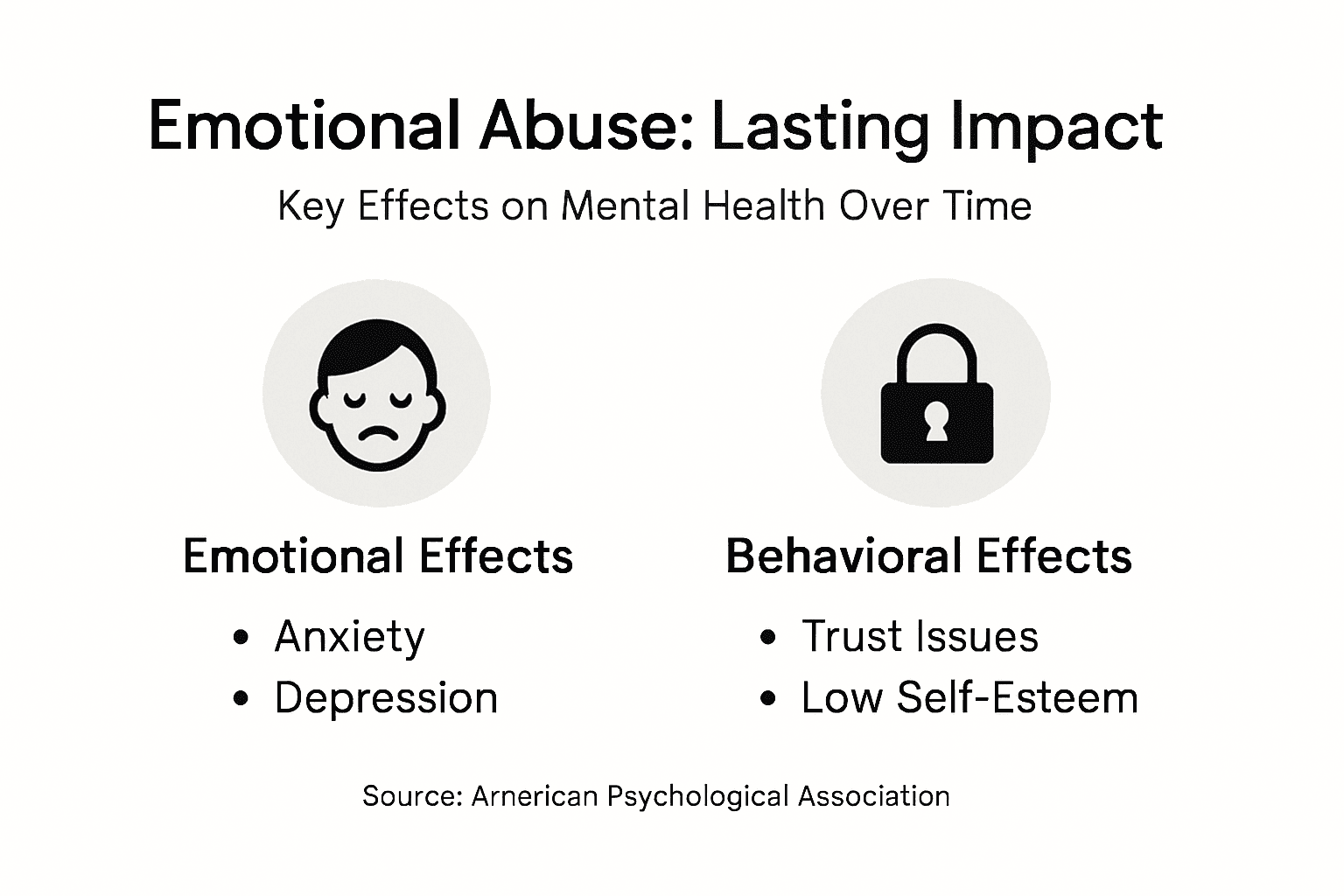
Emotional abuse doesn’t end when the relationship does. The damage persists long after the abuser is gone, reshaping how you think, feel, and interact with the world. Understanding these long-term effects helps you recognize what you’re experiencing and why professional support matters.
Anxiety and Hypervigilance
Chronic anxiety is one of the most common long-term effects of emotional abuse. Your nervous system stays in a state of high alert, constantly scanning for danger and expecting the worst.
This hypervigilance manifests as:
- Difficulty relaxing even in safe environments
- Heart racing or panic attacks triggered by reminders of your abuser
- Obsessive worry about things you can’t control
- Trouble sleeping or constant nightmares
- Physical tension and muscle pain with no clear cause
Your body learned that the world isn’t safe. Healing means retraining your nervous system to recognize safety again.
Depression and Loss of Self
Emotional abuse systematically dismantles your sense of self. Years of criticism, humiliation, and control leave you feeling empty, hopeless, and disconnected from life.
Depression following abuse often includes:
- Persistent sadness and numbness
- Loss of interest in activities you once enjoyed
- Difficulty concentrating or making decisions
- Feelings of worthlessness and guilt
- Thoughts of harming yourself
You internalized the abuser’s messages about your value. Rebuilding self-worth takes time and therapeutic support.
Emotional abuse doesn’t just hurt you in the moment—it rewires how you see yourself, often for years afterward.
Post-Traumatic Stress and PTSD
Emotional abuse is a form of trauma. Your brain encoded the repeated harm as a threat to your survival, creating lasting psychological injuries.
PTSD symptoms can include:
- Flashbacks to abusive incidents
- Avoidance of people, places, or situations that remind you of the abuse
- Intrusive thoughts you can’t control
- Emotional numbness alternating with overwhelming emotions
- Difficulty trusting others or forming new relationships
These aren’t character flaws. They’re normal responses to abnormal and harmful situations.
Trust Issues and Relationship Difficulties
Abuse teaches you that people are dangerous. Even after leaving, you may struggle to trust new partners or friends, constantly questioning their motives.
Common relationship challenges include:
- Fear of abandonment or rejection
- Difficulty setting healthy boundaries
- Tendency to attract similar unhealthy partners
- Withdrawal from intimacy and connection
- Self-sabotage when relationships become close
Your protective instincts developed for good reason. With help, you can learn to distinguish between real red flags and trauma responses.
Low Self-Esteem and Identity Loss
Years of being told you’re not good enough reshape your fundamental beliefs about yourself. You internalize the criticism and begin believing the abuser’s narrative about who you are.
This shows up as:
- Persistent self-doubt and imposter syndrome
- Inability to recognize your strengths or accomplishments
- Perfectionism or self-criticism
- Difficulty making decisions because you don’t trust your judgment
- Vulnerability to manipulation by others
Recovering your identity means slowly, deliberately rebuilding faith in yourself.
Physical Health Consequences
The mind-body connection means psychological trauma manifests physically. Chronic stress from abuse weakens your immune system and creates inflammation.
Many survivors experience:
- Chronic pain and tension
- Digestive issues and irritable bowel syndrome
- Weakened immune function
- Increased susceptibility to illness
- Sleep disorders
Healing your mental health supports your physical health recovery too.
Here’s a quick summary of long-term effects linked to emotional abuse:
| Effect Area | Typical Impact | Lasting Challenges |
|---|---|---|
| Mental Health | Anxiety, depression, PTSD | Difficulties trusting, persistent self-doubt |
| Emotional Health | Low self-esteem, identity loss | Difficulty setting boundaries, fear of intimacy |
| Physical Health | Chronic pain, sleep issues | Weakened immunity, digestive troubles |
Why Recovery Takes Time
Emotional abuse doesn’t leave scars you can point to, but the effects on your mental health are substantial and complex. Recovery isn’t linear. You’ll have good days and hard days as you process what happened and rebuild yourself.
The good news? With proper support, you can heal. You can reclaim your sense of self, rebuild trust in others, and create a life that feels safe and meaningful.
Pro tip: Track your mental health symptoms (anxiety levels, sleep quality, mood) in a simple notes app or journal for a few weeks before therapy so you have concrete examples to discuss with your therapist.
Seeking Help and Therapeutic Recovery Options
Recognizing emotional abuse is crucial, but recovery requires professional support. Therapy isn’t a luxury—it’s a necessity when you’re healing from psychological trauma. The right therapeutic approach can help you rebuild your sense of self and reclaim your life.
Why Professional Help Matters
Friends and family care about you, but they can’t provide the specialized treatment emotional abuse requires. Therapists trained in abuse recovery understand the complex psychology of control, manipulation, and trauma in ways that general support cannot address.
Therapy offers:
- A safe space to process trauma without judgment
- Professional assessment of your mental health needs
- Evidence-based treatment strategies
- Tools to rebuild self-esteem and trust
- Help establishing healthy boundaries
- Support addressing specific mental health conditions like anxiety, depression, or PTSD
This specialized care accelerates healing significantly.
Types of Therapy for Emotional Abuse Recovery
Different therapeutic approaches work for different people. The best fit depends on your specific needs, trauma history, and personal preferences.
Cognitive Behavioral Therapy (CBT) identifies and challenges the negative thought patterns abuse created. You learn how to replace distorted thinking with realistic perspectives.
Trauma-Focused Cognitive Behavioral Therapy (TF-CBT) specifically addresses trauma responses and PTSD symptoms through structured protocols designed for abuse survivors.
Dialectical Behavior Therapy (DBT) teaches emotional regulation, distress tolerance, and mindfulness skills—crucial when you’re managing intense emotions from trauma.
Eye Movement Desensitization and Reprocessing (EMDR) helps your brain process traumatic memories by pairing eye movement with trauma processing, reducing the emotional charge of memories.
Individual Psychotherapy provides personalized, long-term support as you explore your experiences and rebuild yourself.
Here’s how common therapy approaches for emotional abuse compare:
| Therapy Type | Main Focus | Typical Benefits | Specialty |
|---|---|---|---|
| CBT | Restructuring thoughts | Boosts self-esteem, reduces anxiety | Negative thinking patterns |
| TF-CBT | Trauma-specific recovery | Addresses PTSD, emotional triggers | Childhood/adult trauma |
| DBT | Emotional regulation skills | Manages intense emotions, builds mindfulness | Distress tolerance |
| EMDR | Trauma processing | Lessens emotional impact of memories | Traumatic experiences |
| Individual Therapy | Personalized support | Explores identity, builds confidence | Any abuse history |
The best therapy is the one you’ll actually engage with—find a therapist you trust and feel safe with.
Finding the Right Therapist
Your therapist should be trained in trauma and abuse recovery. Ask potential therapists about their experience with emotional abuse specifically, not just general counseling.
Look for therapists who:
- Have certification or specialized training in trauma treatment
- Understand the dynamics of abusive relationships
- Offer flexibility (in-person or online therapy options based on your needs)
- Create a safe, non-judgmental environment
- Have availability that fits your schedule
- Accept your insurance or offer affordable rates
Bergen County residents have access to therapists specializing in abuse recovery. A free consultation helps you determine if the therapist is the right fit before committing to ongoing treatment.
Building Your Support System
Therapy is essential, but you also need support beyond the therapist’s office. Trusted friends and family members play a crucial role in your recovery.
Activate your support network by:
- Telling trusted people what you’ve experienced (at your own pace)
- Joining support groups for abuse survivors
- Connecting with advocacy organizations
- Setting boundaries with people who don’t respect your healing process
- Creating a safety plan if you’re still in contact with the abuser
Starting Your Healing Journey
The step from recognizing abuse to seeking help feels enormous. That hesitation is normal. Many survivors worry about being judged, burdening others, or whether therapy will actually help.
Here’s what matters: you deserve support. You deserve healing. And you don’t have to figure this out alone.
The Bergen County therapy practice offers free consultations to discuss your situation and explore treatment options. This gives you a chance to ask questions, assess the fit, and take the first step toward recovery without pressure or commitment.
Pro tip: Before your first therapy session, write down 3-5 goals for what you want to achieve in therapy—whether that’s reducing anxiety, rebuilding confidence, or learning to trust again—so you and your therapist can create a focused treatment plan.
Find Hope and Healing for Emotional Abuse Recovery
Emotional abuse deeply impacts your mental health through ongoing patterns of control, isolation, and psychological harm. If you have recognized the signs of verbal attacks, gaslighting, and trust challenges in your life it is crucial to understand you are not alone. These invisible wounds often lead to anxiety, depression, and a loss of self worth, but compassionate support and targeted therapy can guide you toward reclaiming your confidence and emotional well being.

Take the important next step by exploring specialized help tailored to abuse recovery at Abuse/Neglect Archives: Key Information and Facts – Dr. Stephen Oreski & Associates. Our Bergen County practice offers personalized therapeutic approaches focused on healing trauma and rebuilding trust. Visit https://bergencountytherapist.com to schedule a free consultation with caring therapists who understand the complexities of emotional abuse and are committed to supporting your journey to lasting mental health recovery.
Frequently Asked Questions
What are the signs of emotional abuse?
Signs of emotional abuse include constant criticism, manipulation, gaslighting, isolation from friends and family, and deliberate humiliation. These behaviors target your self-esteem and emotional well-being.
How does emotional abuse impact mental health?
Emotional abuse can lead to a range of mental health issues, including chronic anxiety, depression, PTSD, and trust issues. Survivors often struggle with self-esteem and identity loss long after the abuse has ended.
What forms does emotional abuse take?
Emotional abuse can manifest as verbal attacks, gaslighting, control and isolation tactics, humiliation, and even technology-facilitated abuse. Each form aims to control and diminish the victim’s sense of self.
Why is it difficult to recognize emotional abuse?
Emotional abuse is often subtle and may not leave visible scars like physical abuse. Many survivors question the reality of their experiences because the abuse can appear incremental or minor over time.