

You’ve probably heard the term holistic therapy thrown around in conversations about mental health, but what does it actually mean? Many people confuse it with alternative medicine or think it’s just meditation and yoga. The reality is more nuanced. Holistic therapy represents a comprehensive approach to mental well-being that treats you as a whole person, not just a collection of symptoms. This guide breaks down what holistic therapy truly involves, which methods work, what the research says, and how to choose approaches safely to support your personal growth and emotional health.
Table of Contents
- Key takeaways
- Understanding holistic therapy: What it is and how it works
- Common holistic therapy methods and their roles
- Evidence and expert perspectives on holistic therapy effectiveness
- Balancing benefits and risks: What to consider before choosing holistic therapy
- Enhance your mental well-being with expert therapy in Bergen County
- Frequently asked questions about holistic therapy
Key Takeaways
| Point | Details |
|---|---|
| Whole person approach | Holistic therapy treats you as a whole person by addressing body, mind, emotions, and spirit. |
| Mindfulness and yoga | Core methods include mindfulness practices, yoga or tai chi, art therapy, nutritional counseling, and energy work like acupuncture. |
| Complement conventional therapy | Holistic approaches are intended to complement rather than replace conventional therapy. |
| Moderate evidence varies | There is moderate evidence for mental wellbeing benefits, but results differ between individuals and methods. |
Understanding holistic therapy: What it is and how it works
Holistic therapy operates on a simple but powerful premise: your mental health doesn’t exist in isolation. When you’re struggling with anxiety or depression, it affects your sleep, your physical health, your relationships, and your sense of purpose. Traditional therapy often focuses on thoughts and behaviors, which is valuable. Holistic therapy expands that lens to include your body, emotions, and even spiritual well-being.
Think of it this way. If you’re dealing with chronic stress, a holistic therapist might explore not just your thought patterns but also your sleep habits, diet, exercise routine, and social connections. The benefits of therapy multiply when you address multiple dimensions of wellness simultaneously.
The core methods in holistic therapy include:
- Mindfulness practices that help you observe thoughts without judgment
- Physical interventions like yoga or tai chi that connect body and mind
- Creative expression through art or music therapy
- Nutritional counseling to support brain health
- Energy work such as acupuncture or reiki
- Lifestyle modifications addressing sleep, exercise, and social connections
Pro Tip: Start by identifying which dimension of your life feels most neglected. If you’re mentally exhausted from overthinking, physical practices like yoga might offer the most immediate relief. If you’re physically drained, mindfulness could help you conserve mental energy.
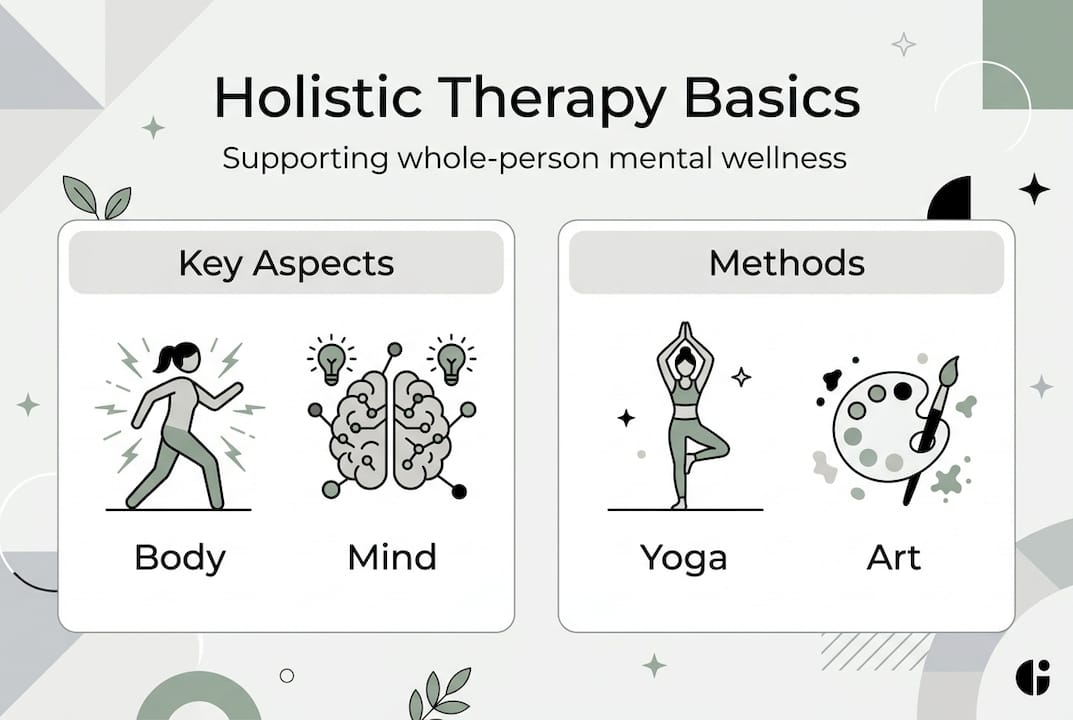
The goal isn’t to master every technique. It’s to find combinations that create balance in your specific situation. A holistic medicine overview shows how these approaches work together to support natural healing processes while complementing conventional treatments.
Common holistic therapy methods and their roles
Let’s get specific about what these methods actually do. Mindfulness meditation trains your attention and helps you recognize thought patterns that fuel anxiety or depression. You’re not trying to stop thinking. You’re learning to notice thoughts without getting swept away by them. This skill transfers directly to daily life when stressful situations arise.
Yoga combines physical movement with breath control and meditation. The physical postures release tension stored in your body, while the breathwork activates your parasympathetic nervous system, which counteracts stress responses. Many people find yoga more accessible than sitting meditation because the movement gives your mind something concrete to focus on.

Acupuncture involves inserting thin needles at specific points to influence energy flow. While the traditional explanations involve chi and meridians, modern research suggests it may work by stimulating nerves and releasing natural pain-relieving chemicals. Some people report reduced anxiety and improved mood after regular sessions.
Art therapy lets you express emotions that are hard to put into words. Creating something with your hands engages different brain regions than talking therapy. This can unlock insights and release feelings that verbal processing alone might miss. It’s particularly helpful for trauma survivors who struggle with narrative memory.
Massage therapy addresses the physical manifestations of stress. Chronic tension in your shoulders, jaw, or back isn’t just uncomfortable. It sends ongoing stress signals to your brain. Regular massage can interrupt this cycle. Nutritional counseling recognizes that what you eat affects neurotransmitter production, inflammation levels, and energy stability throughout the day.
| Method | Primary Focus | Mental Health Application |
|---|---|---|
| Mindfulness | Attention training | Reduces rumination, manages anxiety |
| Yoga | Body-mind integration | Decreases stress hormones, improves mood |
| Acupuncture | Nervous system regulation | May reduce anxiety and depression symptoms |
| Art Therapy | Emotional expression | Processes trauma, builds self-awareness |
| Massage | Physical tension release | Lowers stress, improves sleep quality |
| Nutrition | Biochemical support | Stabilizes mood, supports brain function |
Cognitive behavioral therapy integration represents a bridge between conventional and holistic approaches. A therapist might combine CBT techniques for challenging negative thoughts with mindfulness practices for emotional regulation techniques. This combination often works better than either approach alone.
Lifestyle counseling addresses sleep hygiene, exercise habits, social connection, and daily routines. These factors profoundly influence mental health but often get overlooked in traditional therapy. When you’re sleeping four hours a night and living on coffee, no amount of talk therapy will fully resolve your anxiety.
Pro Tip: Don’t try to overhaul everything at once. Pick one method that resonates with you and practice it consistently for four weeks before adding another. Sustainable change comes from building habits gradually, not from ambitious plans that collapse after two weeks.
Holistic counseling approaches emphasize personalization. What works for your friend might not work for you. The key is finding combinations that fit your lifestyle, preferences, and specific mental health needs. Mindfulness for emotional regulation offers practical starting points if you’re new to these practices.
Evidence and expert perspectives on holistic therapy effectiveness
The research on holistic therapy presents a nuanced picture. A comprehensive meta-analysis of 183 randomized controlled trials examined mindfulness, yoga, and exercise interventions. The findings showed statistically significant improvements in mental well-being, with effect sizes ranging from small to moderate. Translation: these methods help, but they’re not miracle cures.
The average improvement was meaningful enough to notice in daily life, but individual experiences varied widely. Some participants reported dramatic benefits. Others noticed minimal change. This variability is crucial to understand. Holistic therapy isn’t a one-size-fits-all solution.
| Study Type | Sample Size | Key Finding | Effect Size |
|---|---|---|---|
| Meta-analysis (mindfulness) | 12,000+ participants | Reduced anxiety and depression symptoms | Small to moderate (d=0.3-0.5) |
| Yoga intervention studies | 8,000+ participants | Improved mood and stress management | Moderate (d=0.4-0.6) |
| Exercise trials | 15,000+ participants | Decreased depressive symptoms | Moderate to large (d=0.5-0.8) |
| Combined approaches | 5,000+ participants | Enhanced overall well-being | Moderate (d=0.4-0.7) |
A qualitative study on complementary medicine revealed something interesting. Participants described complex, sometimes contradictory experiences. They valued the emotional regulation skills they learned but also felt ambivalent about outcomes. Some days the techniques worked brilliantly. Other days they seemed useless.
This ambivalence reflects reality. Mental health isn’t linear. Progress involves setbacks, plateaus, and breakthroughs. Holistic therapy provides tools, but you still have to navigate the messy, unpredictable nature of human emotion.
“The evidence supports integrating holistic methods with conventional therapy for enhanced outcomes. However, we must avoid overstating benefits or suggesting these approaches can replace evidence-based treatments for serious mental illness. The goal is complementary care, not alternative care.” – Clinical researchers in integrative mental health
Experts emphasize several limitations in current research. Many studies lack rigorous control groups. Publication bias means positive results get published more often than null findings. Long-term follow-up data remains limited. We don’t fully understand why some people respond dramatically while others don’t.
The most promising evidence comes from studies examining combined approaches. When people use holistic methods alongside conventional therapy, outcomes typically exceed either approach alone. This makes intuitive sense. Addressing multiple dimensions of wellness creates more pathways to improvement.
Therapy approaches research continues to evolve. New studies are exploring which specific combinations work best for different conditions. The field is moving toward personalized treatment plans that match methods to individual needs, preferences, and circumstances.
Balancing benefits and risks: What to consider before choosing holistic therapy
Holistic therapy offers genuine benefits, but it’s not risk-free. The biggest danger comes from using these methods as replacements for conventional treatment when dealing with severe mental illness. If you’re experiencing suicidal thoughts, psychotic symptoms, or severe depression, you need professional psychiatric care. Holistic methods can complement that care but shouldn’t substitute for it.
Some specific concerns to consider:
- Certain practices can destabilize trauma survivors if introduced too quickly or without proper guidance
- People with eating disorders may misuse nutrition-focused approaches to justify restriction
- Mindfulness can sometimes increase anxiety in people with PTSD by bringing unwanted memories to the surface
- Unregulated practitioners may lack training to recognize when someone needs more intensive intervention
- Exaggerated marketing claims create unrealistic expectations that lead to disappointment and abandonment of helpful treatments
- Financial exploitation occurs when practitioners charge high fees for unproven methods
The ethical concerns about holistic therapy center on overclaiming benefits without solid evidence. Some practitioners present holistic methods as cure-alls, which sets people up for failure. Others dismiss conventional treatments entirely, which can be dangerous for individuals with serious conditions.
A balanced approach recognizes both potential and limitations. Holistic therapy works best when integrated thoughtfully with conventional care. Your primary therapist should know about all the complementary methods you’re using. This allows them to monitor your overall progress and adjust treatment as needed.
Pro Tip: Before starting any holistic therapy, ask practitioners about their training, credentials, and experience with your specific concerns. Qualified professionals will be transparent about what they can and cannot help with. They’ll encourage you to maintain conventional care rather than suggesting you abandon it.
Steps for evaluating holistic therapy options safely:
- Discuss your interest with your primary mental health provider first
- Research practitioners’ credentials and verify their licensing when applicable
- Start with one method rather than multiple simultaneous approaches
- Set realistic expectations based on research evidence, not marketing claims
- Monitor your symptoms objectively using a journal or tracking app
- Maintain open communication between all your care providers
- Be willing to discontinue methods that aren’t helping or causing problems
Choosing the right therapy involves weighing evidence, personal preferences, and practical considerations. The goal is finding approaches that genuinely support your well-being without creating new problems or delaying necessary treatment.
Therapy ethical issues remind us that even well-intentioned practitioners can cause harm through inadequate training or poor judgment. Your safety depends on choosing providers carefully and staying engaged in your own care decisions.
Enhance your mental well-being with expert therapy in Bergen County
Navigating mental health options can feel overwhelming, especially when you’re already struggling. You don’t have to figure this out alone. Professional therapists in Bergen County understand how to integrate holistic approaches with evidence-based conventional care, creating personalized treatment plans that address your whole person, not just isolated symptoms.

Whether you’re dealing with anxiety, depression, relationship challenges, or simply want to grow as a person, expert guidance makes the journey more effective and safer. Choosing the right therapy starts with understanding your options and finding practitioners who listen to your concerns while offering realistic, evidence-based solutions.
Local therapists can help you explore which holistic methods might complement your treatment. They’ll work with you to develop coping strategies that fit your lifestyle and values. If you’re struggling with depression therapy options, professional support provides structure and accountability that self-help approaches often lack. Monitoring mental health becomes easier with expert guidance to interpret what you’re experiencing and adjust your approach accordingly.
Frequently asked questions about holistic therapy
What makes holistic therapy different from conventional therapy?
Holistic therapy addresses physical, emotional, mental, and spiritual dimensions simultaneously, while conventional therapy typically focuses primarily on thoughts, behaviors, and emotions. The holistic approach recognizes that changes in one area affect all others, so treatment plans include lifestyle factors like sleep, nutrition, exercise, and social connection alongside traditional therapeutic techniques.
Which holistic methods are most effective for emotional regulation?
Mindfulness meditation and yoga show the strongest research support for improving emotional regulation. Mindfulness helps you observe emotions without reacting impulsively, while yoga combines physical release with breath control to calm your nervous system. Art therapy also helps some people process and express difficult emotions that are hard to verbalize.
Are there risks to using holistic therapy without medical supervision?
Yes, particularly for serious mental health conditions. Attempting to treat severe depression, PTSD, or eating disorders with holistic methods alone can delay necessary psychiatric care and worsen outcomes. Some practices like intensive meditation can destabilize trauma survivors if introduced without proper preparation and support. Always work with qualified professionals who understand both holistic and conventional approaches.
How can I find a qualified holistic therapist in Bergen County?
Start by asking your primary care doctor or current therapist for referrals to practitioners who integrate holistic methods with conventional care. Verify credentials through state licensing boards and professional organizations. During initial consultations, ask about their training in specific methods, experience with your concerns, and how they coordinate with other healthcare providers. Qualified therapists will encourage you to maintain comprehensive care rather than suggesting you abandon conventional treatment.
How long does it take to see results from holistic therapy?
Most people notice initial changes within four to eight weeks of consistent practice, though this varies significantly by individual and method. Mindfulness and yoga typically show benefits within a month of regular practice. Physical interventions like acupuncture or massage may provide immediate relief that builds with repeated sessions. Sustainable improvements in mental well-being generally require several months of integrated practice alongside conventional therapy.