

Most American adults will face at least one traumatic event in their lifetime, but few realize how often post-traumatic stress disorder is misunderstood. If you are living in Bergen County and struggling with the aftermath of abuse, untangling the reality behind PTSD can feel overwhelming. This guide unpacks what PTSD truly is, highlights common myths, and connects you with local mental health expertise so you can take the next steps toward healing.
PTSD Guide: Causes, Symptoms, Impact & Treatment Options
- Defining PTSD And Common Misconceptions
- Types Of Traumatic Experiences That Cause PTSD
- Recognizing PTSD Symptoms And Triggers
- Risks, Impact, And Barriers To Treatment
- Evidence-Based PTSD Therapies And Support
Key Takeaways
| Point | Details |
|---|---|
| Understanding PTSD | Post-Traumatic Stress Disorder is a serious mental health condition that can develop after experiencing traumatic events, affecting anyone regardless of background. |
| Recognizing Symptoms | Symptoms typically include intrusive memories, avoidance behaviors, negative mood changes, and heightened arousal responses, which are crucial for diagnosis and treatment. |
| Barriers to Treatment | Survivors of PTSD often face systemic barriers to accessing effective treatment, exacerbating the condition’s impact on their lives. |
| Effective Therapies | Evidence-based therapies like Cognitive Processing Therapy, Prolonged Exposure, and EMDR are essential for effective PTSD treatment and recovery. |
Defining PTSD and Common Misconceptions
Post-traumatic Stress Disorder (PTSD) is a complex mental health condition that emerges after experiencing or witnessing deeply traumatic events. Unlike typical stress responses, PTSD represents a profound psychological reaction that can fundamentally disrupt an individual’s emotional processing and daily functioning.
According to psychiatric research, PTSD develops when someone experiences extremely stressful or life-threatening situations such as physical or sexual abuse, natural disasters, combat exposure, serious accidents, or violent assaults. Not everyone who experiences trauma will develop PTSD post-traumatic stress disorder treatment, which distinguishes it from a typical stress response. For a clinical PTSD diagnosis, symptoms must persist longer than one month and create significant disruption in personal, professional, or social domains.
The disorder manifests through four primary symptom categories: intrusive memories, avoidance behaviors, negative mood changes, and heightened arousal responses. Intrusive memories might include vivid flashbacks or nightmares about the traumatic event. Avoidance behaviors emerge when individuals consciously or unconsciously prevent themselves from experiencing reminders of the trauma. Negative mood changes can involve persistent negative emotions, distorted self-perception, or emotional numbness. Arousal symptoms include hypervigilance, exaggerated startle responses, and difficulty concentrating or sleeping.
Contrary to popular misconception, PTSD is not a sign of personal weakness or a condition exclusive to military veterans. It can affect anyone regardless of age, gender, ethnicity, or background. The disorder represents a normal human response to abnormal, overwhelming experiences that exceed an individual’s ability to cope.
Pro tip:If you suspect you might be experiencing PTSD symptoms, reach out to a mental health professional who specializes in trauma recovery for a comprehensive evaluation and personalized treatment plan.
Types of Traumatic Experiences That Cause PTSD
PTSD emerges from a wide spectrum of profoundly distressing experiences that overwhelm an individual’s ability to process and cope with intense emotional or physical threats. These traumatic encounters can fundamentally disrupt a person’s sense of safety, creating deep psychological wounds that extend far beyond the initial incident.
Traumatic experiences that frequently trigger PTSD include interpersonal violence, such as physical or sexual abuse, domestic violence, and violent personal assaults. Childhood trauma therapy approaches highlight how early traumatic experiences can have particularly profound long-term psychological impacts. Military combat, terrorist attacks, serious accidents, natural disasters, and sudden unexpected loss also represent significant potential trauma sources that can lead to PTSD development.
Some traumatic experiences carry higher risk factors for PTSD development. Prolonged or repeated trauma, such as ongoing childhood abuse, intimate partner violence, or sustained exposure to combat environments, can create more complex psychological responses. The intensity, duration, and personal interpretation of the traumatic event significantly influence whether an individual develops PTSD. Additionally, factors like prior mental health history, support systems, and individual resilience play crucial roles in determining psychological recovery.
It is critical to understand that trauma responses are highly individual. Not every person exposed to a traumatic event will develop PTSD, and the disorder manifests differently across individuals. Some people might experience immediate symptoms, while others might develop PTSD months or even years after the traumatic experience. The human brain’s response to overwhelming stress is complex and deeply personal.
Here’s a summary of how different types of traumatic experiences influence the risk of developing PTSD:
| Traumatic Experience Type | Typical Risk Level | Impact on Long-Term Recovery | Notable Features |
|---|---|---|---|
| Single Incident (accident) | Moderate | Brief therapies often effective | Sudden onset, short duration |
| Repeated Abuse (childhood) | High | Complex, needs long-term support | Early onset, deep psychological effect |
| Combat Exposure (military) | High | Extended care frequently needed | Intense triggers, stigma issues |
| Natural Disaster | Variable | Support networks vital | Shared community trauma |
| Interpersonal Violence | High | Group therapy can supplement | May involve trust issues |
Pro tip:If you or someone you know has experienced trauma, remember that seeking professional support is a sign of strength, not weakness, and can be instrumental in healing and recovery.
Recognizing PTSD Symptoms and Triggers
PTSD manifests through a complex constellation of psychological and physiological responses that can profoundly disrupt an individual’s emotional equilibrium and daily functioning. Understanding these symptoms requires recognizing the intricate ways trauma fundamentally reshapes one’s perception of safety and personal experience.

The disorder typically presents through four primary symptom categories: intrusive memories, avoidance behaviors, negative mood alterations, and heightened arousal responses. Post-traumatic stress disorder treatment often begins with identifying these specific symptom clusters. Intrusive memories might include vivid, unexpected flashbacks that transport survivors back to their traumatic experience, accompanied by intense emotional and physical reactions. These memories can emerge through nightmares, sudden sensory triggers, or seemingly unrelated environmental cues that unconsciously remind the brain of the original trauma.
Triggering experiences can be extraordinarily subtle and deeply personal. A specific sound, smell, location, or even a particular tone of voice might unexpectedly activate traumatic memory circuits, causing immediate psychological and physiological stress responses. These triggers can provoke intense emotional reactions like panic, rage, or complete emotional shutdown. Survivors might experience exaggerated startle responses, persistent anxiety, difficulty concentrating, and significant sleep disturbances. Some individuals develop hypervigilance, constantly scanning their environment for potential threats, which can create profound exhaustion and social isolation.
Recognizing these symptoms requires compassionate, nuanced understanding. PTSD is not a sign of weakness but a complex neurological response to overwhelming experiences. The brain’s protective mechanisms can become dysregulated, creating persistent survival responses that no longer serve the individual’s current reality. Each person’s PTSD manifestation is unique, influenced by personal history, support systems, and individual resilience.
Pro tip:Keep a trigger journal to help identify specific emotional and physiological responses, which can provide valuable insights for therapeutic intervention and personal healing.
Risks, Impact, and Barriers to Treatment
PTSD is a complex mental health condition that extends far beyond its immediate psychological symptoms, creating profound ripple effects across an individual’s personal, professional, and social landscapes. The disorder’s impact reaches deep into multiple life domains, often creating cascading challenges that can significantly compromise overall quality of life.
Survivors face numerous systemic barriers to receiving effective treatment. Cognitive behavioral therapy approaches represent critical intervention strategies, yet access remains challenging. Geographic limitations, insufficient insurance coverage, prohibitive treatment costs, and persistent mental health stigma create substantial obstacles. Rural communities and marginalized populations experience particularly significant treatment access challenges, with over half of US counties reporting no practicing psychiatrists, effectively leaving many trauma survivors without professional support.
The economic and personal impacts of untreated PTSD are substantial. Individuals may experience decreased workplace productivity, higher rates of job instability, relationship difficulties, and increased likelihood of developing co-occurring mental health conditions like depression or substance abuse disorders. These secondary consequences can create a complex cycle of psychological and socioeconomic challenges that compound the original traumatic experience. Survivors might struggle with maintaining stable employment, experiencing meaningful personal relationships, and managing day-to-day emotional regulation.
Addressing PTSD requires a comprehensive, multifaceted approach that recognizes the disorder’s complexity. Healthcare systems, community support networks, and mental health professionals must collaborate to reduce treatment barriers, challenge societal stigma, and develop more accessible, affordable therapeutic interventions. This involves expanding telehealth options, improving insurance coverage for mental health services, and creating community education programs that normalize trauma recovery conversations.
Pro tip:Research local support groups and sliding-scale therapy options to help overcome financial barriers and find community-based mental health resources.
Evidence-Based PTSD Therapies and Support
PTSD treatment represents a nuanced, multifaceted approach that recognizes the profound complexity of trauma’s psychological impact. Effective interventions must be carefully tailored to address each survivor’s unique experiences, symptoms, and personal healing journey.
Examples of trauma therapy reveal several evidence-based approaches that have demonstrated significant clinical effectiveness. Trauma-focused psychotherapies emerge as primary treatment modalities, with Cognitive Processing Therapy (CPT), Prolonged Exposure (PE), and trauma-focused Cognitive Behavioral Therapy (CBT) representing gold-standard interventions. These therapeutic strategies share a fundamental goal of helping survivors process traumatic memories, challenge distorted thought patterns, and develop healthier coping mechanisms.
Therapeutic interventions typically integrate multiple treatment strategies. Psychotherapy remains the cornerstone, often complemented by carefully prescribed medications like SSRIs or SNRIs to manage concurrent symptoms such as anxiety or depression. Individual therapy sessions allow for personalized exploration of trauma responses, while group therapy can provide critical peer support and reduce feelings of isolation. Emerging treatment approaches also include innovative techniques like eye movement desensitization and reprocessing (EMDR), which helps survivors reprocess traumatic memories through specialized bilateral stimulation techniques.
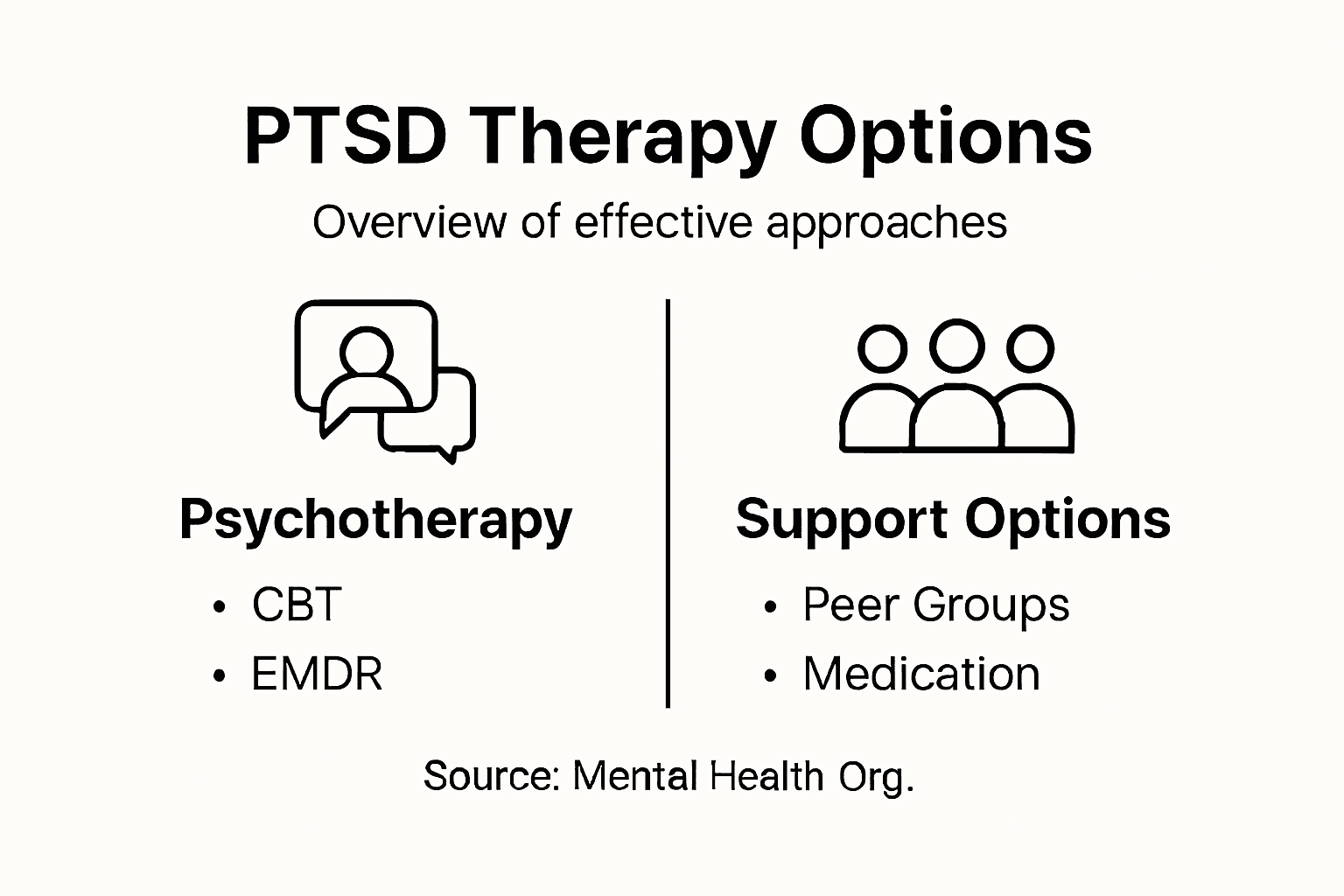
Below is an overview of evidence-based therapies for PTSD and their typical benefits and considerations:
| Therapy Approach | Main Benefit | Frequently Used For | Key Consideration |
|---|---|---|---|
| Cognitive Processing Therapy | Changes negative thinking | Combat trauma, abuse survivors | Requires active engagement |
| Prolonged Exposure | Reduces avoidance | Accident-related PTSD, phobias | Can be emotionally intense |
| Trauma-Focused CBT | Builds coping strategies | Children and adults | Adaptable across age groups |
| EMDR | Reprocesses traumatic memories | Flashbacks, nightmares | Relies on bilateral stimulation |
| Medications (SSRIs/SNRIs) | Eases anxiety and mood | Complex or resistant symptoms | Can have side effects |
Successful PTSD treatment requires a holistic, patient-centered approach that considers individual preferences, cultural background, and symptom severity. Mental health professionals must collaborate closely with survivors, creating safe, compassionate environments that prioritize emotional safety, validate individual experiences, and empower survivors to reclaim agency in their healing process.
Pro tip:Seek therapists with specific trauma certification and ask about their experience treating PTSD to ensure you receive the most effective, specialized care.
Take Control of PTSD’s Impact on Your Daily Life
Living with PTSD can feel overwhelming as intrusive memories, avoidance behaviors, and constant hypervigilance disrupt your sense of safety and well-being. This article clearly highlights these emotional challenges and the barriers to recovery many survivors face. If you are seeking compassionate, personalized support to help you manage symptoms and rebuild your life, expert help is available.

Explore tailored therapeutic approaches by visiting our Trauma / PTSD Archives – Dr. Stephen Oreski & Associates where you will find valuable information about evidence-based treatments. At Dr. Stephen Oreski & Associates, we specialize in creating individualized treatment plans including therapies focused on trauma recovery. Take the first step toward healing by scheduling a free consultation today. Your journey to lasting positive change begins now.
Frequently Asked Questions
What is PTSD and how does it affect daily life?
PTSD, or Post-traumatic Stress Disorder, is a mental health condition that can develop after experiencing or witnessing traumatic events. It can disrupt daily life by causing symptoms such as intrusive memories, avoidance behaviors, negative mood changes, and heightened arousal responses. These symptoms can affect work, relationships, and overall well-being.
What are common symptoms of PTSD?
Common symptoms of PTSD include flashbacks or nightmares related to the trauma, avoiding reminders of the event, persistent negative emotions, difficulty sleeping, and heightened anxiety or hypervigilance. Individuals may feel emotionally numb or disconnected from others as well.
How do traumatic experiences contribute to PTSD?
Different types of traumatic experiences, such as interpersonal violence, military combat, or natural disasters, can trigger PTSD. The intensity, duration, and individual interpretation of the event influence the likelihood of developing PTSD. Even small triggers can evoke intense psychological responses in survivors.
What barriers do individuals face when seeking treatment for PTSD?
Survivors of PTSD often face barriers such as limited access to mental health care, high treatment costs, and stigma surrounding mental illness. Rural populations may struggle with a shortage of mental health professionals, further complicating access to necessary treatment.