

Grief after losing someone you love can feel overwhelming, but when symptoms mirror post-traumatic stress disorder (PTSD), you may be experiencing traumatic grief. This condition goes beyond typical mourning, creating intense distress that disrupts daily life for months or even years. Many adults in Bergen County struggle to understand why their grief feels so different, so persistent, and so frightening. This guide explains what traumatic grief is, how to recognize prolonged grief disorder, and which therapeutic approaches support healing and personal growth.
Table of Contents
- What Is Traumatic Grief? Defining The Condition
- Recognizing Prolonged Grief Disorder: Symptoms And Diagnosis
- The Overlap Of Trauma And Grief: Clinical Insights And Signs
- Supporting Healing: Therapeutic Approaches For Traumatic Grief
- Find Supportive Therapy For Traumatic Grief In Bergen County
- Frequently Asked Questions About Traumatic Grief
Key takeaways
| Point | Details |
|---|---|
| Traumatic grief mirrors PTSD | Intense distress, intrusive thoughts, and avoidance behaviors characterize this condition, making it feel different from typical mourning. |
| Prolonged grief disorder is diagnosable | Symptoms lasting 12+ months in adults meet clinical criteria for this mental health condition recognized since 2022. |
| Affects 7-10% of bereaved adults | Prevalence increases after violent or sudden deaths, making specialized support crucial for many. |
| Therapy supports healing | Evidence-based approaches like CBT and EMDR help process trauma and restore functioning. |
What is traumatic grief? Defining the condition
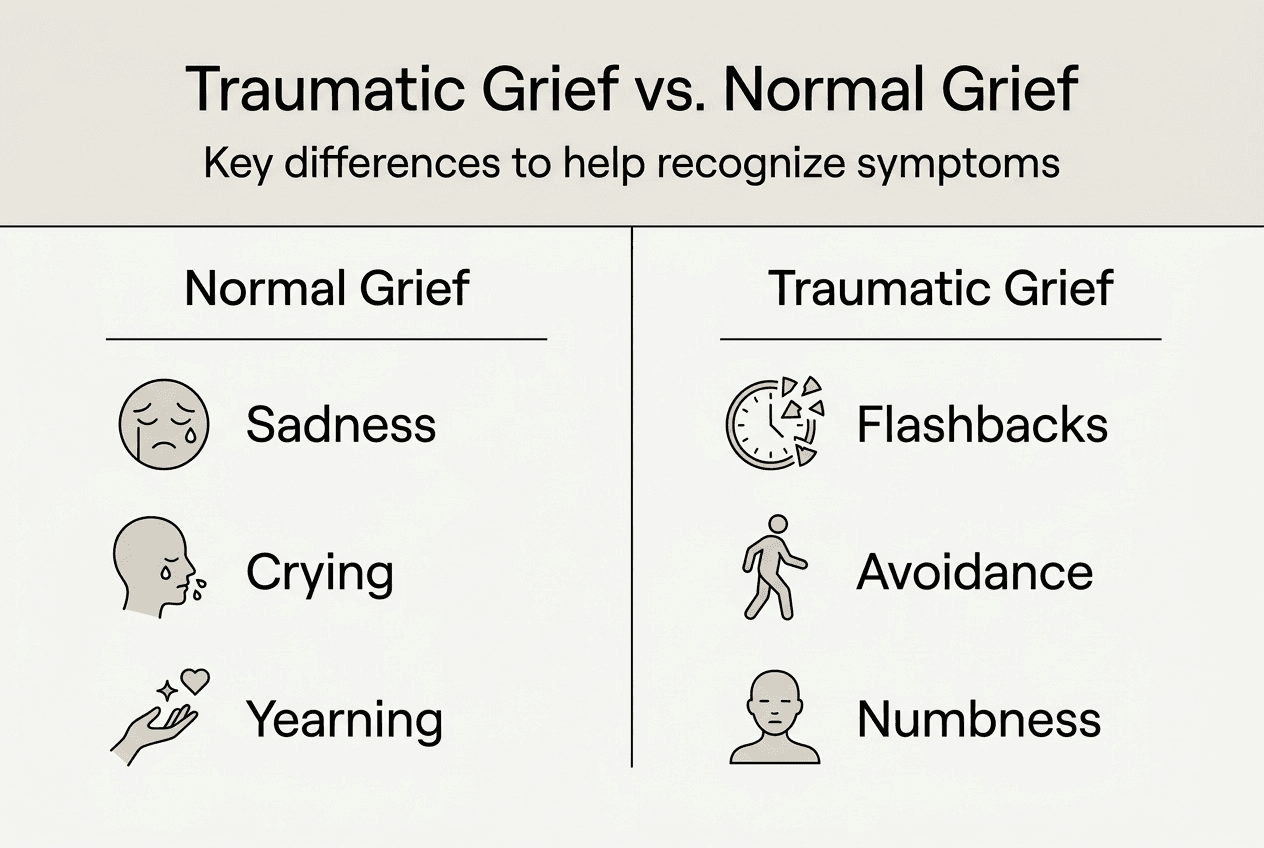
Traumatic grief represents a distinct form of bereavement where loss intersects with trauma, creating symptoms that feel overwhelming and persistent. Unlike typical grief that gradually softens over time, traumatic grief involves intense and prolonged distress, intrusive thoughts, avoidance behaviors, and difficulty accepting the loss. These reactions mirror PTSD symptoms, leaving you feeling stuck in a cycle of pain that doesn’t ease.
The clinical community now recognizes this condition formally. Since March 2022, the DSM-5-TR includes prolonged grief disorder (PGD) as a diagnosable mental health condition. This recognition validates what many bereaved individuals experience: grief that doesn’t follow expected patterns and instead creates debilitating emotional and physical symptoms.
What sets traumatic grief apart from normal mourning? The intensity, duration, and impact on your ability to function. While most people gradually adapt to loss within six to twelve months, traumatic grief persists far longer. You might find yourself:
- Experiencing intrusive memories or flashbacks of the death
- Actively avoiding reminders of your loved one
- Feeling emotionally numb or detached from others
- Struggling with intense yearning that doesn’t diminish
- Having difficulty accepting the reality of the loss
These symptoms don’t mean you’re weak or grieving incorrectly. They signal that trauma has complicated your mourning process, requiring specialized support. Understanding post traumatic embitterment disorder can also help clarify how trauma responses manifest differently in various individuals.
Pro Tip: If you notice persistent avoidance of places, people, or activities connected to your loved one lasting beyond six months, consider consulting a grief specialist. Early intervention improves outcomes significantly.
“Grief becomes traumatic when the circumstances of death are sudden, violent, or unexpected, or when the bereaved person lacks adequate social support or has a history of trauma or mental health challenges.” This combination creates a perfect storm for prolonged, complicated bereavement.
Recognizing traumatic grief early matters. The sooner you identify these patterns, the sooner you can access evidence-based practices that support healing. Therapy tailored to traumatic grief addresses both the loss itself and the trauma symptoms that prevent natural mourning processes from unfolding.
Recognizing prolonged grief disorder: symptoms and diagnosis
Prolonged grief disorder (PGD) provides a clinical framework for understanding when grief becomes a mental health condition requiring treatment. The DSM-5-TR recognizes PGD as lasting 12+ months in adults or 6+ months in children, with specific diagnostic criteria that distinguish it from typical bereavement.
The core requirement for diagnosis involves daily intense yearning or preoccupation with the deceased person for at least one month. This isn’t occasional sadness or missing someone. It’s a consuming focus that dominates your thoughts and emotions, interfering with work, relationships, and self-care.
Additional symptoms must be present to meet diagnostic criteria:
- Identity disruption (feeling like part of you died)
- Marked sense of disbelief about the death
- Avoidance of reminders of the loss
- Intense emotional pain (anger, bitterness, sorrow)
- Difficulty reengaging with life
- Emotional numbness or detachment
- Feeling life is meaningless without the deceased
- Intense loneliness despite social connections
The prevalence of PGD reveals how common this struggle is. Approximately 7-10% of bereaved adults and 5-10% of children and adolescents develop prolonged grief disorder. These rates climb dramatically after violent, sudden, or traumatic deaths, sometimes affecting up to 50% of survivors.
| Symptom Category | Specific Manifestations | Duration Threshold |
|---|---|---|
| Core symptoms | Daily yearning, preoccupation with deceased | At least 1 month |
| Identity symptoms | Sense of self disrupted, feeling incomplete | 12+ months (adults) |
| Cognitive symptoms | Disbelief, difficulty accepting reality | 12+ months (adults) |
| Behavioral symptoms | Avoidance, social withdrawal | 12+ months (adults) |
| Emotional symptoms | Numbness, anger, meaninglessness | 12+ months (adults) |
Understanding complicated grief helps contextualize PGD within the broader spectrum of bereavement challenges. While complicated grief is a general term for difficult mourning, PGD represents a specific, diagnosable condition with clear criteria.
The severity and duration of symptoms matter for diagnosis. Everyone experiences intense grief initially, but PGD persists well beyond typical timelines. If you’re still experiencing debilitating symptoms a year after your loss, professional evaluation can clarify whether you meet PGD criteria.
Pro Tip: Keep a simple journal tracking your grief symptoms daily for two weeks. Note intensity levels, triggers, and functional impacts. This data helps therapists assess whether your experience aligns with PGD criteria and guides treatment planning.
Recognizing PGD opens doors to targeted interventions. Unlike general grief support, treatments for prolonged grief disorder address the specific mechanisms keeping you stuck. Coping with grief after loss requires different strategies when trauma complicates the process, making accurate diagnosis essential for effective healing.
The overlap of trauma and grief: clinical insights and signs
When trauma accompanies loss, grief and trauma intertwine, creating complex emotional landscapes that challenge both you and your support system. This overlap intensifies suffering and complicates the natural mourning process, requiring specialized understanding and intervention.

Trauma symptoms transform how you experience grief. Instead of gradually processing your loss, you might find yourself trapped in fight-or-flight responses that prevent healing. The circumstances of death matter enormously here. Witnessing violence, discovering a body, or losing someone suddenly without warning all increase the likelihood of traumatic grief.
Common signs of trauma in grieving include hypervigilance, intrusive imagery, sleep disturbances, emotional numbing, avoidance of reminders, and persistent guilt. These symptoms don’t replace grief; they layer on top of it, creating a dual burden that feels impossible to navigate alone.
Specific markers signal traumatic bereavement:
- Nightmares featuring the death or deceased person
- Flashbacks that feel like reliving the loss
- Intense fear or panic when reminded of circumstances surrounding the death
- Compulsive avoidance of anything connected to your loved one
- Hyperarousal making relaxation impossible
- Guilt about surviving or perceived failures to prevent the death
Clinical research identifies fear and avoidance as key markers of traumatic bereavement. If you notice yourself actively avoiding grief rather than gradually integrating it, trauma likely complicates your mourning. This avoidance might look like refusing to visit the grave, removing all photos, or changing your entire routine to escape reminders.
The emotional numbing that accompanies trauma creates another layer of difficulty. You might feel disconnected from your own emotions, unable to cry or express sadness even when you want to. This numbness isn’t healing; it’s a protective mechanism that ultimately prevents you from processing your loss.
Pro Tip: Notice whether you experience sudden, intense emotional reactions when unexpectedly reminded of your loved one. These outsized responses often indicate unprocessed trauma requiring therapeutic attention.
Understanding coping with grief techniques becomes crucial when trauma complicates bereavement. Standard grief support may not address trauma symptoms adequately. You need approaches that target both the loss and the traumatic stress simultaneously.
Grief therapy techniques specifically designed for traumatic loss help you process trauma while honoring your grief. These methods recognize that you can’t fully mourn until you address the trauma keeping you in survival mode. Exploring grief therapy options reveals specialized approaches that integrate trauma treatment with bereavement support.
The overlap of trauma and grief explains why some losses feel impossibly difficult to navigate. Your brain is simultaneously trying to process loss while managing threat responses. This dual task overwhelms your natural coping capacity, making professional support not just helpful but necessary for healing.
Supporting healing: therapeutic approaches for traumatic grief
Effective therapy for traumatic grief addresses both loss and trauma simultaneously, using evidence-based approaches tailored to your specific needs. Therapy adapted to individual experiences supports healing and personal growth, recognizing that your path through grief is unique.
Several therapeutic modalities show strong effectiveness for traumatic grief:
- Cognitive Behavioral Therapy (CBT) helps you identify and change thought patterns that keep you stuck in grief and trauma responses.
- Eye Movement Desensitization and Reprocessing (EMDR) processes traumatic memories while reducing their emotional intensity.
- Prolonged Grief Disorder Therapy (PGDT) specifically targets the mechanisms maintaining complicated grief.
- Complicated Grief Treatment (CGT) combines elements of CBT with grief-specific interventions.
- Group therapy provides connection with others navigating similar losses, reducing isolation.
Your therapist will tailor treatment based on symptom severity, trauma history, and personal preferences. The primary goals include processing traumatic aspects of the loss, reducing avoidance behaviors, restoring daily functioning, and gradually reengaging with life while maintaining connection to your loved one.
| Therapy Type | Primary Focus | Best For | Typical Duration |
|---|---|---|---|
| CBT | Thought patterns, behaviors | Anxiety, avoidance, rumination | 12-20 sessions |
| EMDR | Trauma memory processing | Flashbacks, intrusive images | 6-12 sessions |
| PGDT | Grief-specific mechanisms | Prolonged grief disorder | 16 sessions |
| CGT | Acceptance, reengagement | Complicated grief | 16 sessions |
| Group therapy | Social connection, validation | Isolation, feeling alone | Ongoing |
Timing matters when seeking support. Early engagement with a specialist improves outcomes significantly. You don’t need to wait until you’re completely overwhelmed to start therapy. In fact, beginning treatment when you first notice concerning symptoms prevents patterns from becoming entrenched.
Pro Tip: Look for therapists with specific training in both trauma and grief. This dual expertise ensures they understand the unique challenges of traumatic bereavement and can apply appropriate interventions.
Exploring grief therapy options in Bergen County reveals various approaches available locally. Many therapists now offer both in-person and virtual sessions, increasing accessibility for those struggling with avoidance or mobility challenges.
Psychotherapy treatment for traumatic grief typically involves several phases. Initially, you’ll work on stabilization and safety, learning to manage overwhelming emotions. The middle phase focuses on processing traumatic memories and integrating the loss. The final phase emphasizes rebuilding life and finding meaning.
Therapy doesn’t erase your grief or make you forget your loved one. Instead, it helps you carry your loss differently, reducing suffering while preserving connection. You learn to remember without being overwhelmed, to honor your loved one while reengaging with life.
Additional coping with grief resources complement therapy, providing tools for managing difficult moments between sessions. These resources might include journaling exercises, mindfulness practices, or peer support groups.
The therapeutic relationship itself becomes a powerful healing force. Working with someone who understands traumatic grief creates a safe space to explore painful emotions without judgment. Your therapist provides both expertise and compassionate support as you navigate this difficult journey.
Find supportive therapy for traumatic grief in Bergen County
Navigating traumatic grief requires specialized professional support that understands the unique intersection of loss and trauma. Dr. Stephen Oreski & Associates offer comprehensive psychotherapy treatment options specifically designed for adults in Bergen County coping with complex bereavement.

Our team provides individualized approaches that address your specific symptoms, trauma history, and healing goals. Whether you’re struggling with prolonged grief disorder, intrusive trauma symptoms, or difficulty reengaging with life, we tailor treatment to your needs. Exploring our grief therapy options reveals evidence-based approaches that support both processing loss and managing trauma responses. We also help you develop skills for tracking your mental health progress throughout treatment, ensuring you can recognize improvements and address setbacks effectively.
Frequently asked questions about traumatic grief
What’s the difference between traumatic grief and complicated grief?
Traumatic grief specifically involves trauma symptoms like flashbacks and hypervigilance alongside bereavement, while complicated grief is a broader term for any difficult mourning process. Traumatic grief typically follows sudden, violent, or unexpected deaths that create PTSD-like responses.
When should I seek professional help for grief?
Seek help if intense grief symptoms persist beyond 12 months, if you experience trauma symptoms like nightmares or avoidance, or if grief significantly impairs your ability to work, maintain relationships, or care for yourself. Early intervention prevents patterns from becoming entrenched and improves outcomes.
How long does therapy for traumatic grief typically take?
Treatment duration varies based on symptom severity and individual needs, typically ranging from 12 to 20 sessions for focused interventions. Some people benefit from longer-term support, while others see significant improvement within a few months. Your therapist will collaborate with you to determine appropriate treatment length.
Can traumatic grief symptoms appear months or years after a loss?
Yes, delayed grief reactions occur when initial coping mechanisms break down or when anniversary dates, life transitions, or new losses trigger unprocessed grief. Trauma symptoms can also emerge later as avoidance strategies fail, making it important to seek support whenever symptoms become problematic.
Will I ever feel normal again after traumatic loss?
Healing from traumatic grief doesn’t mean returning to your previous self, but rather integrating the loss and developing a new normal that honors both your loved one and your own continued growth. Most people find that with appropriate support, they can rebuild meaningful lives while maintaining connection to those they’ve lost.