

Every parent faces moments when family conversations turn tense or misunderstandings pile up, leaving everyone feeling unheard. For Bergen County families, addressing these challenges matters because strong communication and a supportive environment help children grow emotionally secure. By exploring family therapy with licensed professionals, families can gain practical tools to improve relationships, resolve conflicts, and create a safe space where every member—including your child—can thrive.
Table of Contents: Your Family Therapy Roadmap
- Family Therapy Explained And Common Myths
- Types Of Family Therapy Approaches
- How Family Therapy Sessions Work
- The Therapist’s Role And Your Family’s Responsibilities
- Potential Challenges And Realistic Outcomes
Key Takeaways
| Point | Details |
|---|---|
| Family Therapy Facilitates Healing | Family therapy is a collaborative approach that fosters healing by improving family dynamics and communication. |
| Various Approaches Address Unique Needs | Different therapeutic methods like Functional and Systemic Family Therapy cater to specific challenges and enhance interaction strategies. |
| Active Participation is Crucial | Success in family therapy relies on the commitment of all members to engage openly and practice new communication skills. |
| Expect Gradual Improvement | Realistic outcomes involve incremental changes in understanding, empathy, and communication rather than immediate resolution of all issues. |
Family Therapy Explained and Common Myths
Family therapy represents a powerful approach to resolving interpersonal challenges by bringing together multiple family members in a supportive, structured therapeutic environment. Unlike individual counseling, this approach recognizes that individual struggles are often deeply interconnected with family dynamics and communication patterns. Family therapy focuses on healing relationships, improving understanding, and developing healthier interaction strategies among all family members.
At its core, family therapy involves working with various combinations of family members to address specific mental health concerns, behavioral challenges, or relational conflicts. Understanding family therapy requires recognizing that the goal is not to assign blame, but to create a collaborative environment where each member can express their perspectives and work toward collective healing. Licensed mental health professionals, typically specialized therapists, guide these sessions using evidence-based techniques designed to enhance communication, resolve conflicts, and promote emotional wellness.
Some common myths about family therapy can prevent families from seeking the support they need. Many people mistakenly believe that family therapy means someone is “at fault” or that it indicates a fundamental problem with the family unit. In reality, family therapy is a proactive approach to strengthening relationships and developing more effective coping mechanisms. Whether addressing life transitions, managing grief, resolving communication breakdowns, or supporting a member struggling with mental health challenges, this therapeutic approach offers a compassionate and constructive pathway toward improved family dynamics.
Pro tip:Before your first family therapy session, encourage each family member to approach the process with an open mind and a commitment to listening without judgment.
Types of Family Therapy Approaches
Family therapy encompasses several specialized approaches, each designed to address unique family dynamics and therapeutic goals. Functional Family Therapy (FFT) stands out as a targeted intervention specifically focused on youth and young adult behavioral challenges. This evidence-based model goes beyond individual treatment by examining and reshaping family interaction patterns, providing a comprehensive approach to resolving complex relational issues.
Another prominent approach is Systemic Family Therapy, which views family relationships as intricate networks of emotional and behavioral interactions. Family therapy services often utilize this method to understand how communication patterns, emotional responses, and individual behaviors interconnect within the family system. Therapists trained in systemic approaches carefully analyze how family members influence and respond to each other, creating interventions that promote healthier relationship dynamics and more effective communication strategies.

Some additional family therapy approaches include Strategic Family Therapy, which focuses on solving specific problems by changing family interaction patterns, and Narrative Family Therapy, which helps families reframe their personal stories and perspectives. The Structural Family Therapy model examines family boundaries and hierarchies, helping families restructure their relationships to support individual and collective emotional health. These diverse approaches share a common goal: empowering families to develop more supportive, understanding, and resilient relationships.
Here’s a comparison of common family therapy approaches and their focus areas:
| Approach | Primary Focus | Typical Use Case |
|---|---|---|
| Functional Family Therapy | Youth behavioral challenges | Addressing teen risk behaviors |
| Systemic Family Therapy | Family relational dynamics | Complex communication issues |
| Strategic Family Therapy | Solving specific family problems | Short-term targeted interventions |
| Narrative Family Therapy | Changing family stories | Reshaping perspectives |
| Structural Family Therapy | Family roles and hierarchies | Redefining boundaries |
Pro tip:Before selecting a specific family therapy approach, discuss your unique family dynamics and goals with a licensed therapist who can recommend the most appropriate intervention strategy.
How Family Therapy Sessions Work
Family therapy sessions are structured, collaborative experiences designed to address complex family dynamics through guided professional intervention. Therapeutic sessions typically begin with an initial assessment where the therapist explores the family’s unique communication patterns, relationship challenges, and specific goals for treatment. The benefits of family counseling become immediately apparent as families learn to communicate more effectively and understand each other’s perspectives in a supportive environment.
The structure of family therapy sessions varies depending on the specific approach and family needs, but most follow a similar comprehensive framework. Therapists create a neutral, non-judgmental space where family members can openly discuss challenges, express emotions, and learn new interaction strategies. Sessions might involve different combinations of family members – sometimes involving the entire family, other times working with specific subgroups or individual members to address targeted relationship dynamics. The therapist acts as a skilled facilitator, guiding conversations, identifying unhealthy communication patterns, and introducing techniques to improve mutual understanding and conflict resolution.
Practical elements of family therapy often include interactive exercises, communication skill-building activities, and homework assignments designed to reinforce therapeutic insights between sessions. These interventions help families develop more constructive interaction patterns, enhance emotional intelligence, and build resilience. Some sessions might focus on specific issues like managing conflicts, addressing behavioral challenges, navigating life transitions, or healing from past emotional wounds. The ultimate goal is always to strengthen family bonds, improve individual and collective emotional well-being, and create more supportive, understanding family dynamics.
Pro tip:Approach family therapy with genuine openness and a commitment to personal growth, recognizing that meaningful change requires active participation from all family members.
The Therapist’s Role and Your Family’s Responsibilities
Family therapy involves a carefully balanced partnership between the licensed therapist and participating family members, each bringing unique responsibilities to the therapeutic process. Marriage and Family Therapists (MFTs) are specially trained mental health professionals who view family challenges through a holistic lens, focusing on relational patterns rather than individual blame. Questions to ask when selecting a family therapist can help families ensure they find a professional who understands this collaborative approach and can effectively guide their healing journey.
The therapist’s primary responsibilities include creating a neutral, safe environment where family members can openly communicate, identifying underlying communication patterns, and teaching constructive interaction strategies. They act as skilled facilitators who help families recognize destructive dynamics, develop emotional intelligence, and learn practical conflict resolution techniques. Unlike traditional individual therapy, family therapists concentrate on the entire system’s health, helping families understand how each member’s actions and emotions interconnect and influence one another.
Family members, in turn, must actively participate and commit to personal growth and systemic change. This means being willing to examine personal behaviors, listen without defensiveness, complete suggested therapeutic assignments, and practice new communication skills outside therapy sessions. Each family member shares responsibility for creating positive change, which requires vulnerability, honesty, and a genuine commitment to understanding different perspectives. The most successful family therapy outcomes emerge when all participants approach the process with openness, empathy, and a shared desire to strengthen family relationships.
Pro tip:Approach family therapy as a collaborative journey, where each member’s willingness to be vulnerable and learn creates the potential for meaningful, lasting transformation.
Potential Challenges and Realistic Outcomes
Family therapy is a complex process that requires emotional courage, vulnerability, and realistic expectations. Therapy challenges can emerge from deeply ingrained family dynamics, resistance to change, and the emotional complexity of confronting long-standing relationship patterns. The benefits of family counseling become most apparent when families understand that progress is rarely linear and requires sustained commitment from all members.
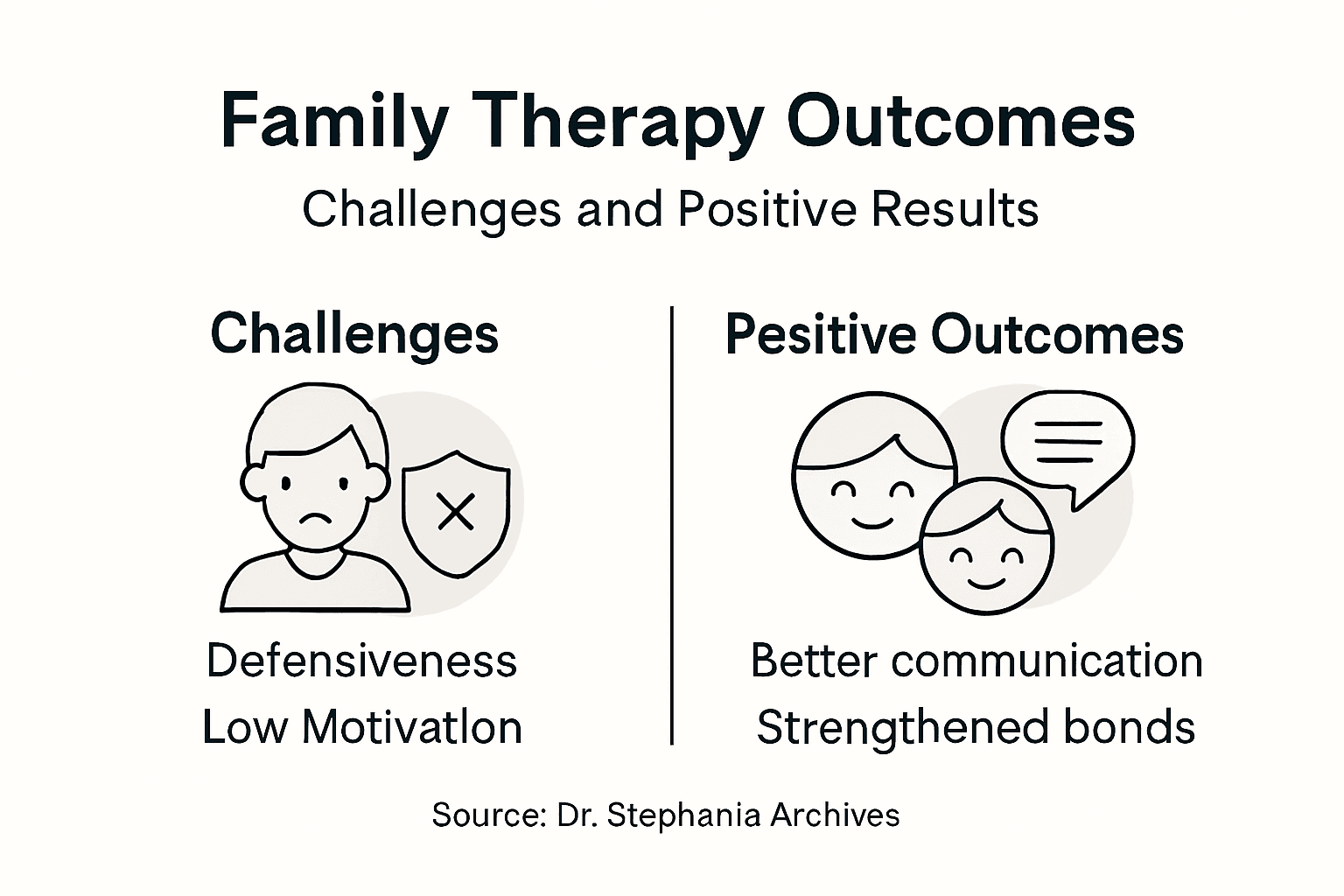
Typical challenges families might encounter include initial defensiveness, unequal levels of motivation among family members, and the uncomfortable process of revealing vulnerable emotions. Some family members might feel blamed or uncomfortable discussing sensitive topics, while others may be more eager to engage in the therapeutic process. Therapists help families navigate these differences by creating a balanced, non-judgmental environment that encourages open communication and mutual understanding. The goal is not to assign fault but to collectively develop healthier interaction strategies and emotional resilience.
The following table summarizes potential family therapy challenges and positive outcomes:
| Challenge | Therapist’s Role | Realistic Positive Outcome |
|---|---|---|
| Initial defensiveness | Creating safe environment | Gradual increase in openness |
| Uneven motivation levels | Encouraging equal participation | Improved family engagement |
| Emotional vulnerability | Modeling empathy and patience | Stronger emotional understanding |
| Fear of blame | Focusing on collaboration | Healthier conflict resolution |
| Resistance to change | Incremental goal setting | Sustainable behavior modification |
Realistic outcomes of family therapy are nuanced and depend on each family’s unique circumstances. While immediate resolution of all conflicts is unlikely, families can expect gradual improvements in communication, increased empathy, better conflict resolution skills, and a deeper understanding of each other’s perspectives. Successful therapy might result in reduced interpersonal tension, improved emotional regulation, and a stronger sense of family connection. Some families may address specific issues like managing behavioral challenges, healing from past traumas, or navigating significant life transitions. The most important outcome is developing a more supportive, understanding family system that can adapt and grow together.
Pro tip:Approach family therapy as a long-term investment in your family’s emotional health, understanding that meaningful change happens incrementally and requires patience and consistent effort.
Take the First Step Toward Stronger Family Connections with Expert Guidance
Understanding what to expect in family therapy sessions can ease anxiety and prepare your loved ones for a transformative experience. If you are facing challenges like communication breakdowns, emotional vulnerability, or conflicts within your family system, professional support offers a compassionate path forward. Family therapy focuses on rewriting interaction patterns and building empathy, helping every member to actively participate in healing and growth.

Discover tailored solutions designed for your unique family dynamics by exploring our Family Therapy Archives – Dr. Stephen Oreski & Associates. At https://bergencountytherapist.com, Dr. Stephen Oreski and his dedicated team provide personalized care that prioritizes open communication and lasting positive change. Take the next step now by scheduling a free consultation to begin strengthening your family bonds today.
Frequently Asked Questions
What should I expect during the first family therapy session?
In the first session, the therapist will typically conduct an initial assessment to explore your family’s unique communication patterns, relationship challenges, and goals for therapy. This sets the foundation for subsequent sessions.
How long do family therapy sessions usually last?
Family therapy sessions generally last between 50 to 90 minutes, depending on the needs of the family and the specific approach taken by the therapist.
How many sessions does family therapy usually require?
The number of sessions varies widely based on each family’s unique situation and goals. Some families may benefit from just a few sessions, while others might engage in therapy for several months to achieve meaningful changes.
Can all family members attend the therapy sessions?
Yes, family therapy sessions can include different combinations of family members. Sometimes the whole family attends, while other times only specific individuals or subgroups may be involved to address particular dynamics.