

Feeling weighed down by anxiety or sadness is more common in Bergen County than you might think, yet false ideas about therapy keep many adults from reaching out for help. Therapy is not just for major crises or serious mental illness—it is a path toward personal growth, resilience, and a better understanding of yourself. By clearing up common misconceptions about therapy, you can feel more confident taking the first step toward meaningful emotional support.
Table of Contents
- Therapy Explained And Common Misconceptions
- Therapeutic Approaches And Personalized Support
- What Happens During Therapy Sessions
- Real-World Benefits Of Seeking Therapy
- Barriers To Therapy And How To Overcome Them
Key Takeaways
| Point | Details |
|---|---|
| Therapy is for Everyone | Therapy aids in personal growth and managing everyday challenges, not just for severe mental illness. |
| It’s a Collaborative Process | Therapists guide discussions to help discover personal solutions rather than just dispensing advice. |
| Change Takes Time | Therapeutic breakthroughs occur gradually, requiring multiple sessions for significant progress. |
| Myths Can Hold You Back | Common misconceptions about therapy can discourage individuals from seeking help and should be addressed for better awareness. |
Therapy Explained And Common Misconceptions
Therapy isn’t what most people think it is. Many residents in Bergen County harbor misconceptions that prevent them from seeking help, even when they’d benefit greatly from support.
Here are the biggest myths holding people back:
- Therapy is only for serious mental illness. Actually, therapy helps people navigate everyday stress, relationship issues, career decisions, and personal growth. You don’t need a crisis to benefit.
- Therapists just give advice. They don’t. Your therapist guides you to discover your own solutions through collaborative conversation and reflection.
- One session should fix everything. Real change takes time. Most therapeutic breakthroughs happen over weeks or months as you build new patterns and understanding.
- Therapy means something’s wrong with you. Wrong. Therapy is a tool for anyone wanting to understand themselves better, process difficult experiences, or grow emotionally.
- Your therapist will judge you. They won’t. Therapists maintain complete confidentiality and create non-judgmental spaces specifically designed for you to be honest.
What Therapy Actually Is
Evidence-based talk therapy works by creating a confidential space where you explore your thoughts, feelings, and behaviors with a trained professional. The science behind talk therapy and why it works demonstrates that structured conversations with a therapist produce measurable changes in brain function and emotional regulation.
Therapy isn’t advice-giving. Instead, it’s a collaborative process where your therapist asks thoughtful questions, helps you identify patterns, and supports you in developing your own solutions. You’re in control of what you discuss and how fast you move.
Different modalities exist for different needs. Individual therapy explained with Dr. Stephen Oreski & Associates covers personalized approaches tailored to your specific situation, whether you’re dealing with anxiety, depression, or simply wanting to understand yourself better.
Real therapy is collaborative—your therapist guides, but you drive the process and set the pace.
Why These Myths Persist
Media portrayals don’t help. Movies show therapists as mysterious figures who fix people in one dramatic session. Real therapy is quieter and more gradual, which doesn’t translate to entertainment.
Stigma also plays a role. Many people grew up hearing that therapy meant something was “wrong” with you. That’s simply outdated thinking. Today, therapy is recognized as a tool for growth, resilience, and self-understanding.
People often worry about what seeking help says about them. Here’s the reality: it says you’re willing to invest in yourself and your wellbeing. That takes strength, not weakness.
Pro tip: _If you’re hesitant about therapy, start with a free consultation to talk with a therapist and see if it feels like a good fit—no commitment required.
Therapeutic Approaches And Personalized Support
Not all therapy looks the same, and that’s by design. What works for your neighbor might not work for you, which is why personalized approaches matter so much in mental health treatment.
Therapy has evolved far beyond a one-size-fits-all model. Modern evidence-based practice tailors interventions to match your specific needs, preferences, and circumstances. This customization produces measurably better outcomes than generic treatment approaches.
How Personalization Works
Your therapist evaluates several factors to create your treatment plan:
- Your specific challenges. Anxiety presents differently than depression, and relationship stress requires different tools than work-related burnout.
- Your learning style and preferences. Some people think best through conversation; others benefit from structured exercises or written reflections.
- Your background and values. Cultural context, life experience, and what matters to you all shape what approach will resonate.
- Your goals. Are you managing symptoms, processing past experiences, or building new skills? The answer determines your path.
- Your pace. Some clients move quickly through concepts; others need more time to integrate changes. Your therapist adjusts accordingly.
Common Therapeutic Approaches
Cognitive Behavioral Therapy (CBT) focuses on the connection between your thoughts, feelings, and behaviors. It’s highly structured and works well for anxiety and depression.
Psychodynamic therapy explores how past experiences shape current patterns. It suits people wanting deeper self-understanding over time.
Acceptance and Commitment Therapy (ACT) teaches you to accept difficult feelings while moving toward meaningful life goals. Effective for chronic stress and anxiety.
Dialectical Behavior Therapy (DBT) combines cognitive techniques with mindfulness and validation. Originally developed for serious mental health conditions, it helps many Bergen County residents regulate emotions.
Individual therapy approaches address personal challenges with methods matched to your unique situation, ensuring your treatment feels relevant and effective.
Here’s a quick comparison of common therapy modalities and their primary benefits:
| Therapy Type | Focus Area | Best For |
|---|---|---|
| CBT | Changing thought patterns | Anxiety, depression |
| Psychodynamic | Exploring past impacts | Deep self-understanding |
| ACT | Accepting emotions, moving forward | Chronic stress, anxiety |
| DBT | Emotional regulation, mindfulness | Emotion management, resilience |
Your therapist doesn’t pick one approach and stick with it rigidly—they blend techniques based on what’s working for you.
What Data-Driven Personalization Means
Modern therapy uses routine outcome monitoring—your therapist regularly checks whether you’re progressing and adjusts the plan if needed. This isn’t guesswork; it’s systematic feedback ensuring your treatment stays on track.

Some practices track specific metrics like symptom severity, relationship satisfaction, or functional improvement. If progress stalls, your therapist changes tactics rather than continuing an ineffective approach.
This evidence-based adjustment separates effective treatment from generic counseling. You’re not hoping something works; you’re measuring what does work.
Finding Your Match
The right approach depends on your specific situation. During an initial consultation, discuss what you’re experiencing and what outcomes matter most to you. A skilled therapist listens and recommends approaches aligned with your needs.
Your comfort with your therapist matters as much as the technique. A strong therapeutic relationship itself contributes significantly to positive outcomes. If something doesn’t feel right, your therapist should welcome that feedback or help you find someone who’s a better fit.
Pro tip: Ask your therapist during your first session what approach they’re using and why it fits your situation—transparency about the plan builds trust and engagement.
What Happens During Therapy Sessions
Walking into a therapy session for the first time can feel uncertain. You might wonder what to expect, how to behave, or whether you’ll say the right things. Here’s the reality: there’s no “right” way to do therapy.
Each session is a collaborative conversation designed specifically around your needs. Your therapist creates a structured space where meaningful work happens, but you control the pace and direction.
The Structure of a Typical Session
Most sessions follow a similar rhythm, though your therapist adjusts based on what you need:
- Opening check-in (5-10 minutes). Your therapist asks how you’ve been since the last session and what brought you in today. This grounds the conversation in your current reality.
- Main work (35-45 minutes). You explore whatever feels most pressing—recent conflicts, persistent anxiety, past experiences, or patterns you’ve noticed. Your therapist asks questions and offers observations.
- Wrapping up (5-10 minutes). You discuss takeaways, identify what you might try before the next session, and plan your next appointment.
Sessions typically last 45-50 minutes. Some therapists use the full hour; others build in brief buffer time between clients.
What’s Actually Happening in the Room
The therapeutic alliance—your relationship with your therapist—matters enormously. Research shows it’s one of the strongest predictors of positive outcomes. Your therapist isn’t detached or mysterious; they’re actively engaged in understanding you.
Verbally, your therapist uses specific techniques:
- Reflective listening. They repeat back what they heard to ensure accuracy and show they’re genuinely present.
- Thoughtful questions. Rather than advice, they ask questions that help you explore deeper.
- Validation. They acknowledge that your feelings and experiences make sense given your circumstances.
- Gentle challenges. They might point out patterns you haven’t noticed, always with respect for your perspective.
Non-verbal communication matters too. Your therapist’s tone, body language, and facial expressions all communicate safety and attentiveness. When you feel genuinely heard and respected, real change becomes possible.
Why Sessions Feel Different Over Time
Your first few sessions focus on building trust and understanding your story. You might feel awkward or unsure what to share. That’s completely normal.
As sessions continue, the work deepens. Individual therapy for healing builds progressively as your therapist understands your patterns and you develop skills to address them.
You’ll notice shifts: anxiety feels more manageable, conflicts feel less overwhelming, or you understand yourself differently. These changes emerge gradually through the accumulated work of multiple sessions.
The magic of therapy isn’t one brilliant insight—it’s consistent, focused attention on what matters to you.
What You Bring to Sessions
Your job is simpler than you might think: show up and be honest. You don’t need to be eloquent, organized, or have everything figured out. Confusion, contradictions, and messy emotions are exactly what therapy addresses.
Bring your authentic self. If something the therapist says doesn’t land right, tell them. If you’re unsure about a suggestion, say so. Honest feedback strengthens your work together.
The therapy space is confidential and judgment-free. Whatever you share stays private, allowing you to explore without fear of consequences.
Pro tip: Keep a notebook between sessions and jot down moments, conflicts, or insights you want to discuss—this helps you use session time more effectively and remember details that felt important.
Real-World Benefits Of Seeking Therapy
Therapy isn’t just for crisis moments. The real value emerges in everyday improvements that transform how you live, work, and connect with others. About 75% of people in therapy experience measurable benefits that ripple through their entire lives.
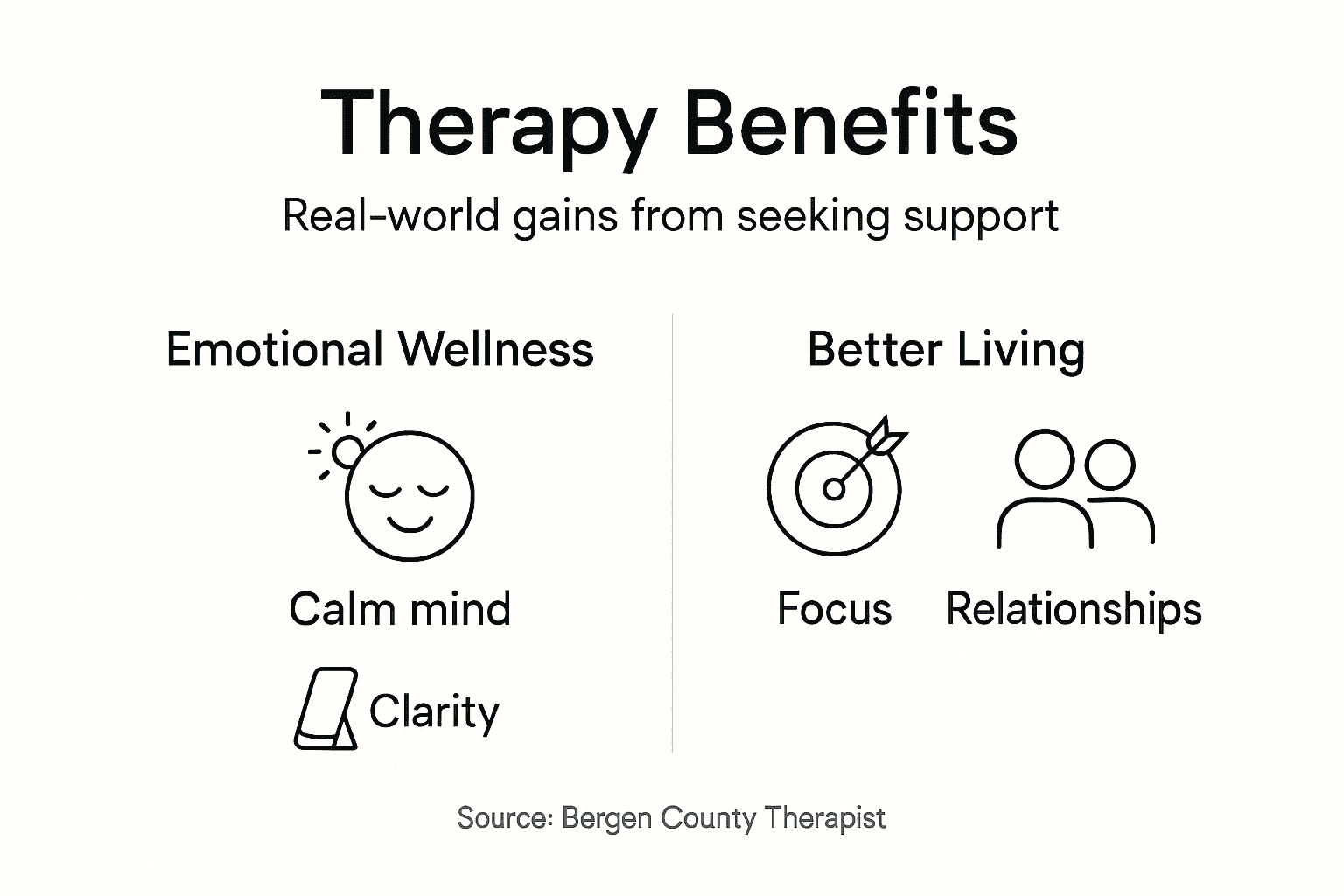
These aren’t vague promises—they’re concrete changes that Bergen County residents report consistently.
Emotional Regulation and Mental Health
One of the first shifts people notice is better emotional control. Instead of being overwhelmed by anxiety or depression, you develop tools to manage these feelings when they arise.
Therapy creates actual brain changes associated with emotional regulation. Your nervous system becomes less reactive, and you respond to stress more thoughtfully. What once felt unbearable starts feeling manageable.
You also gain clearer thinking. Anxiety and depression fog your perspective, making decisions feel impossible. As therapy progresses, that mental haze clears, and you see situations more objectively.
Healthier Relationships
Many people enter therapy because of relationship struggles—with partners, family, or friends. As you understand yourself better, relationship patterns become visible.
You learn to communicate more clearly, set appropriate boundaries, and recognize unhealthy dynamics. Benefits of counseling for personal growth include stronger connections built on honest, respectful interactions rather than old patterns.
Conflict doesn’t disappear, but it becomes something you navigate together rather than something that derails you.
Better Coping and Resilience
Life brings challenges. Therapy equips you with practical strategies for handling them:
- Anxiety management techniques that work in real situations, not just in theory
- Ways to process difficult experiences instead of getting stuck in them
- Problem-solving approaches that feel less overwhelming
- Resilience skills that help you bounce back from setbacks
These aren’t abstract concepts—they’re tools you practice and refine over time, becoming more effective each time you use them.
Improved Work and Daily Functioning
When anxiety or depression lifts, you show up differently at work and home. Productivity increases. You’re less irritable. You have more patience with small frustrations.
You also make better decisions. Clear thinking leads to choices aligned with what actually matters to you, rather than choices made in panic or desperation.
Personal Growth Beyond Symptom Relief
Therapy benefits extend far beyond feeling better—they enable you to become the person you want to be.
Many people continue therapy even after acute symptoms improve because they value ongoing growth. You develop deeper self-understanding, identify what truly matters, and build a life aligned with your values.
This is where therapy becomes truly transformative. It shifts from “managing problems” to “building meaning.”
To help understand the impact, here’s a summary of therapy’s core benefits across life domains:
| Benefit Area | Typical Outcome | Lasting Impact |
|---|---|---|
| Emotional Regulation | Reduced anxiety, clearer thinking | Improved stress response |
| Relationships | Better communication, healthy boundaries | Stronger connections |
| Work & Daily Functioning | Improved productivity, decision-making | Higher satisfaction |
| Personal Growth | Deeper self-awareness, life alignment | Ongoing transformation |
Why These Benefits Stick
Therapy benefits persist because you’re not just getting advice—you’re developing skills and understanding that become part of how you operate. The changes are yours, not dependent on someone else managing them for you.
Research shows that benefits continue and even expand after therapy ends. You’ve built a foundation that supports ongoing growth and resilience.
Pro tip: Track small changes between sessions—improved sleep, fewer anxiety spikes, or better conversations—to recognize progress that might feel subtle in the moment but compounds into significant transformation.
Barriers To Therapy And How To Overcome Them
Knowing therapy helps isn’t the same as actually scheduling an appointment. Real barriers stand in the way—some practical, some emotional, some rooted in misconceptions. Acknowledging these obstacles is the first step toward moving past them.
Berg County residents face the same hurdles that prevent people everywhere from seeking care. The good news: each barrier has a solution.
Financial and Access Barriers
Cost remains one of the biggest obstacles. Therapy isn’t always covered by insurance, and out-of-pocket sessions add up quickly. This feels like a dead end, but options exist.
Many therapists offer sliding scale fees based on income. Some practices provide free initial consultations to help you decide if therapy is right before financial commitment becomes an issue. Online therapy often costs less than in-person sessions while maintaining effectiveness.
Limited provider availability also creates access problems. Booking therapy appointments online removes geography barriers and often provides faster availability than traditional in-person options.
Stigma and Fear of Judgment
Many people worry that seeking therapy means something is “broken” about them or that others will judge them negatively. This fear runs deep but doesn’t match reality.
Think of therapy like physical therapy after an injury—it’s maintenance and skill-building, not proof of weakness. Using tools to improve your mental health demonstrates strength and self-awareness, not the opposite.
Confidentiality laws protect your privacy absolutely. What you share stays between you and your therapist.
Emotional Resistance and Discomfort
Therapy anxiety stops people before they start. You might worry about being vulnerable, discussing painful experiences, or confronting uncomfortable truths about yourself.
This discomfort is temporary and purposeful. Growth happens slightly outside your comfort zone. Managing therapy anxiety naturally gives you practical strategies for handling initial nervousness.
Starting therapy means sitting with discomfort briefly to eliminate much larger discomfort long-term.
Skepticism About Effectiveness
Some people doubt whether talking with someone actually helps. This often stems from media portrayals or past negative experiences with untrained counselors.
Research overwhelmingly supports therapy’s effectiveness. The key is finding the right fit with a qualified therapist using evidence-based approaches. A poor match isn’t proof therapy doesn’t work—it’s proof you need a different therapist.
Practical Solutions
Here’s how to move past these barriers:
- Start small. One consultation doesn’t commit you to anything. You’re evaluating fit.
- Ask questions directly. Good therapists welcome questions about their approach, experience, and fees.
- Prepare thoughtfully. Walking in with clear goals helps sessions feel more productive and less daunting.
- Give it time. Benefits emerge gradually, typically over weeks or months, not immediately.
- Be honest about concerns. If therapy isn’t working, tell your therapist. They can adjust or refer you elsewhere.
Reframing the Barrier as an Investment
Think of therapy costs as an investment in your wellbeing, like exercise equipment or education. The return shows up in better relationships, improved work performance, and genuinely feeling better.
Many people spend more on things that matter far less than their mental health. Therapy offers measurable returns that compound over time.
Pro tip: Start by scheduling just the free consultation—no payment required, no ongoing commitment—to talk with a therapist and see if working together feels like a good fit before deciding further.
Take the First Step Toward Empowering Your Mental Wellness Today
Understanding why to seek therapy is the first step toward healing and growth. If you are facing anxiety, emotional challenges, or everyday stress, personalized support can transform your experience. Our team at Adult Counseling for Life’s Challenges – Dr. Stephen Oreski & Associates specializes in tailoring therapy to your unique needs while guiding you at your own pace.

Don’t let uncertainty or stigma delay your wellbeing. Visit https://bergencountytherapist.com now to schedule a free consultation. Discover how expert care and proven approaches can help you regain control and build lasting resilience. Your next chapter starts with one simple step.
Frequently Asked Questions
What are the common misconceptions about therapy?
Many people believe therapy is only for serious mental illness, that therapists just give advice, or that one session alone can fix their problems. Therapy is beneficial for everyday stress and personal growth, and it fosters collaboration between the therapist and client to discover solutions.
How does therapy actually work?
Therapy involves evidence-based talk therapy in a confidential space, where individuals explore their thoughts, feelings, and behaviors with a trained professional. The process is collaborative, focusing on guiding clients to uncover their solutions rather than providing direct advice.
What types of therapeutic approaches are available?
There are various therapeutic approaches tailored to individual needs, including Cognitive Behavioral Therapy (CBT), Psychodynamic therapy, Acceptance and Commitment Therapy (ACT), and Dialectical Behavior Therapy (DBT). Each method addresses different mental health challenges and personal growth goals.
What can I expect during my first therapy session?
In your first therapy session, you can expect a structured conversation beginning with a check-in about how you’ve been, followed by exploration of what brought you to therapy. It’s a collaborative process, and your therapist will work to understand your unique situation and support your therapeutic goals.
Recommended
- Why Seek Counseling? Discover Benefits with Dr Stephen Oreski & Associates.
- Why Seek Trauma Therapy: Steps Toward Lasting Healing
- Por qué buscar un terapeuta – Impacto en tu bienestar
- 7 Common Teenage Therapy Approaches for Mental Wellness
- Why Discover Your Purpose: Unlocking Fulfillment
- How to Boost Team Morale: 5 Psychology-Backed Strategies – Hoop Mentality