

Reliving the weight of past trauma can feel overwhelming when daily life already asks so much of you. Many adults across Bergen County quietly struggle with distress that lingers long after the event is over, making it difficult to find peace and move forward. Trauma therapy offers proven methods to help you process those memories, rebuild emotional safety, and develop coping strategies so you can begin your journey toward real healing and personal resilience.
Explore Trauma Therapy: Definitions, Types, Healing, Myths & Risks
- Defining Trauma and Trauma Therapy Essentials
- Types of Trauma Therapy and Whom They Help
- How Trauma Therapy Supports Healing
- Common Myths About Seeking Trauma Therapy
- Risks of Untreated Trauma and Delaying Care
Key Takeaways
| Point | Details |
|---|---|
| Understanding Trauma | Trauma can arise from various experiences, significantly impacting mental and emotional well-being. It is essential to recognize the signs and seek appropriate therapy. |
| Importance of Trauma Therapy | Trauma therapy utilizes evidence-based approaches to help individuals process and heal from traumatic experiences, promoting psychological resilience. |
| Types of Trauma Therapy | Different trauma therapies, such as Prolonged Exposure, Cognitive Processing Therapy, and EMDR, serve various survivor needs and contribute to healing. |
| Consequences of Untreated Trauma | Untreated trauma can lead to chronic mental, physical, and social issues, highlighting the urgency of seeking professional help. |
Defining Trauma and Trauma Therapy Essentials
Trauma represents a deeply distressing or overwhelming experience that can fundamentally disrupt an individual’s sense of safety, control, and emotional well-being. According to the American Psychological Association, trauma emerges from events that produce intense fear, helplessness, or profound confusion, potentially causing lasting negative impacts on psychological functioning.
Trauma can originate from various sources, including:
- Life-threatening incidents
- Physical or sexual abuse
- Natural disasters
- Combat experiences
- Severe accidents
- Childhood neglect or violence
When an individual experiences trauma therapy, mental health professionals utilize evidence-based approaches designed to help patients process traumatic memories, develop healthy coping mechanisms, and restore psychological resilience. The primary goal is not just symptom management, but comprehensive healing and emotional reconstruction.
Most trauma responses follow a predictable pattern. For some individuals, distress reactions naturally resolve within weeks. However, when symptoms persist beyond one month and significantly interfere with daily functioning, a Post-Traumatic Stress Disorder (PTSD) diagnosis might be considered. Professional intervention becomes crucial in these circumstances to prevent long-term psychological complications.
Trauma is not what happens to you, but what occurs inside you as a result of what happened.
Pro Tip:Consider scheduling an initial consultation with a trauma-informed therapist to understand your specific healing pathway and develop a personalized recovery strategy.
Types of Trauma Therapy and Whom They Help
Trauma therapy encompasses several specialized approaches designed to address the complex psychological impacts of traumatic experiences. The Department of Veterans Affairs recognizes three primary evidence-based trauma therapies that have demonstrated remarkable effectiveness in helping individuals process and heal from deeply distressing events.
The main trauma therapy approaches include:
- Prolonged Exposure (PE): Helps individuals gradually approach trauma-related memories, feelings, and situations they’ve been avoiding
- Cognitive Processing Therapy (CPT): Focuses on challenging and modifying unhelpful beliefs about the trauma
- Eye Movement Desensitization and Reprocessing (EMDR): Uses bilateral stimulation to help the brain reprocess traumatic memories
Each therapy approach is uniquely suited to different trauma survivors. Examples of trauma therapy reveal that military veterans, sexual assault survivors, and individuals with complex childhood trauma can benefit from tailored treatment strategies. These therapies typically last approximately three months and are customized to address specific psychological needs and trauma experiences.

Here’s a comparison of three major trauma therapy types and their unique applications:
| Therapy Approach | Key Method | Best For |
|---|---|---|
| Prolonged Exposure (PE) | Gradual exposure to memories | PTSD, phobia, severe avoidance |
| Cognitive Processing Therapy (CPT) | Restructuring beliefs about trauma | Trauma survivors with negative thoughts |
| Eye Movement Desensitization and Reprocessing (EMDR) | Bilateral stimulation and reprocessing | Complex trauma, childhood abuse, veterans |
Trauma-focused psychotherapies work by helping individuals understand and reframe their traumatic experiences. They provide safe, structured environments where patients can process intense emotions, develop coping mechanisms, and gradually restore a sense of control and emotional well-being. The ultimate goal is not just symptom management, but comprehensive psychological healing and resilience.
Healing from trauma is not about forgetting, but about creating a new relationship with the experience that empowers rather than overwhelms.
Pro Tip:Consult with a trauma-specialized therapist to determine which therapy approach best matches your unique healing journey and individual trauma experience.
How Trauma Therapy Supports Healing
Trauma therapy provides a structured and compassionate approach to psychological healing, addressing the deep-seated impacts of traumatic experiences. Role of trauma therapy reveals a comprehensive framework designed to help individuals navigate and transform their emotional landscape, ultimately restoring psychological well-being and personal resilience.
The healing process in trauma therapy involves several critical components:
- Creating psychological safety
- Rebuilding trust in oneself and others
- Processing painful memories without re-traumatization
- Developing healthy coping mechanisms
- Restoring a sense of personal control
Trauma-informed care principles guide therapeutic interventions, ensuring that treatment environments are responsive to the unique needs of survivors. These approaches recognize that healing is not linear and requires a patient-centered strategy that respects individual experiences and promotes gradual emotional recovery. Therapists work collaboratively with clients, helping them understand how trauma has impacted their thoughts, emotions, and behaviors.
By providing a supportive, non-judgmental space, trauma therapy enables individuals to gradually reframe their traumatic experiences. This process helps survivors move from feeling powerless to experiencing empowerment, transforming painful memories into opportunities for growth and renewed personal strength.
Healing is not about eliminating all traces of trauma, but about learning to carry those experiences with compassion and resilience.
Pro Tip:Document your emotional journey during therapy, noting small victories and moments of personal insight to track your healing progress and maintain motivation.
Common Myths About Seeking Trauma Therapy
Trauma therapy is often misunderstood, with numerous misconceptions preventing individuals from seeking the support they desperately need. PTSD therapy options reveal that these myths can create significant barriers to healing, discouraging people from exploring potentially transformative treatment approaches.
Common myths about trauma therapy include:
- Myth: Therapy will force you to relive traumatic experiences
- Reality: Therapists use controlled, safe techniques to process memories
- Myth: Only veterans or extreme trauma survivors need therapy
- Reality: Trauma therapy helps individuals with diverse experiences
- Myth: Talking about trauma will make things worse
- Reality: Professional guidance helps reduce trauma’s emotional impact
- Myth: Therapy is a sign of weakness
- Reality: Seeking help demonstrates courage and commitment to healing
- Myth: Trauma therapy takes years to show results
- Reality: Many individuals experience significant improvement within months
Professional trauma therapy is a collaborative, patient-centered approach that respects individual experiences. Contrary to popular belief, these therapeutic interventions are not about dwelling on painful memories, but about developing healthy coping mechanisms and restoring emotional well-being. Therapists use evidence-based techniques that help individuals gradually process and integrate traumatic experiences without overwhelming them.
Healing is a journey of courage, not a measure of past suffering.
Pro Tip:Schedule an initial consultation with a trauma-specialized therapist to discuss your specific concerns and understand how personalized therapy can support your unique healing path.
Risks of Untreated Trauma and Delaying Care
Untreated trauma can create profound and long-lasting negative impacts on an individual’s mental, physical, and social well-being. Childhood trauma therapy approaches highlight the critical importance of addressing traumatic experiences early to prevent cascading psychological complications.
The potential risks of leaving trauma unaddressed include:
- Chronic mental health disorders
- Persistent anxiety and depression
- Higher risk of developing PTSD
- Increased potential for substance abuse
- Physical health complications
- Compromised immune system functioning
- Higher rates of chronic stress-related diseases
- Potential cardiovascular and neurological impacts
- Social and interpersonal challenges
- Difficulty maintaining healthy relationships
- Reduced professional and academic performance
- Increased isolation and emotional withdrawal
Trauma that remains unprocessed can fundamentally alter brain chemistry and emotional processing mechanisms. This neurological reconfiguration can lead to heightened stress responses, diminished emotional regulation, and persistent feelings of vulnerability. Without professional intervention, individuals may develop maladaptive coping strategies that further complicate their healing journey.
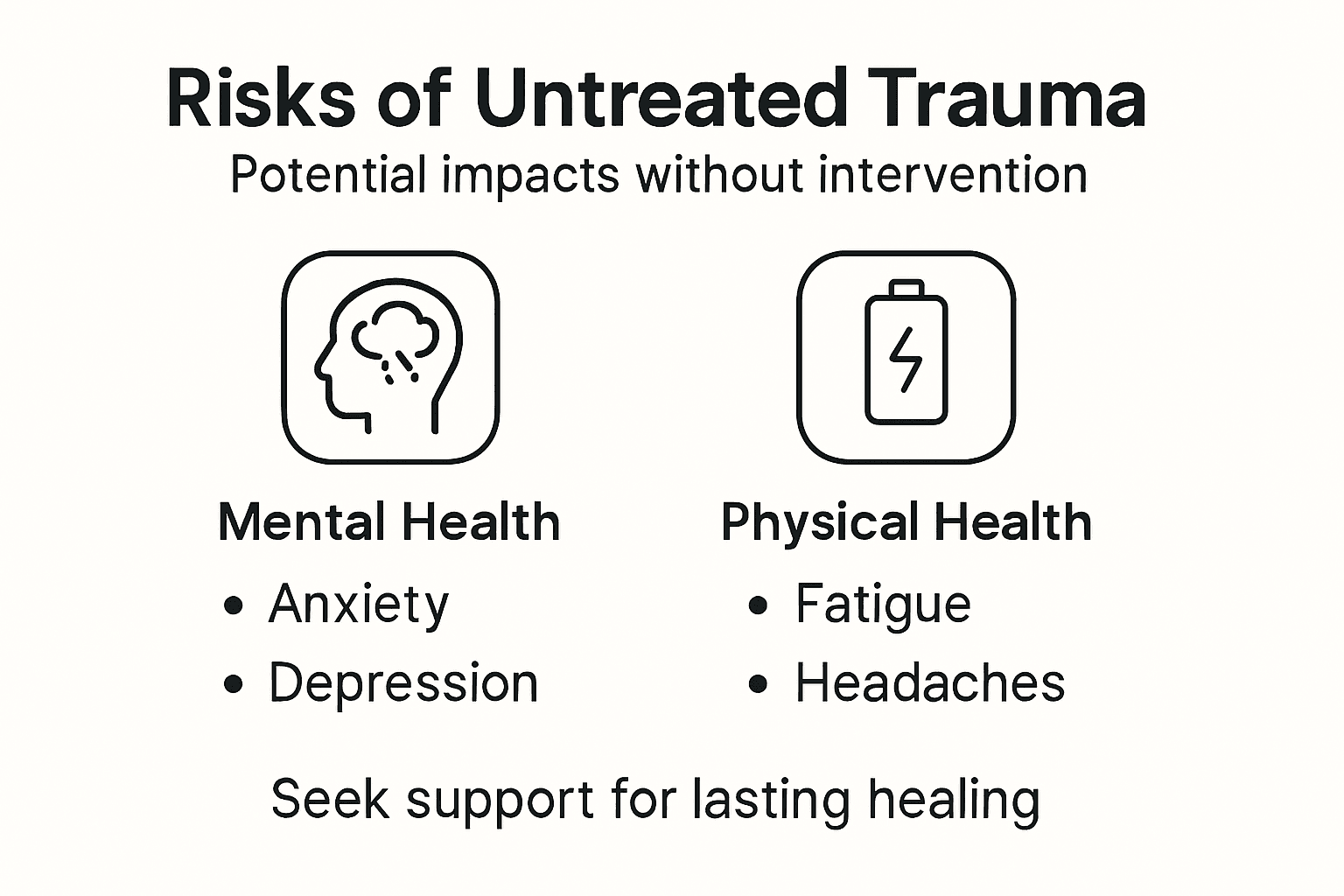
Below is a summary of risks associated with untreated trauma across multiple life domains:
| Domain | Potential Impact | Long-Term Consequence |
|---|---|---|
| Mental Health | Persistent anxiety, depression | Increased PTSD risk, substance abuse |
| Physical Health | Immune dysfunction, chronic stress | Cardiovascular and neurological issues |
| Social Functioning | Isolation, strained relationships | Poor work and academic performance |
Unaddressed trauma doesn’t heal with time—it compounds and transforms, requiring intentional therapeutic intervention.
Pro Tip:Create a supportive network of trusted individuals who can help you recognize and address potential trauma symptoms before they escalate into more serious mental health challenges.
Take the First Step Toward Lasting Healing With Expert Trauma Care
If you have experienced trauma and find yourself struggling with distressing memories or persistent symptoms such as anxiety and avoidance, professional support is essential for true recovery. Understanding the benefits of trauma therapy and the specialized approaches available can empower you to regain control and rebuild emotional resilience. Our Trauma / PTSD Archives – Dr. Stephen Oreski & Associates offers valuable insights that complement what you have learned.

Do not let unresolved trauma hold you back any longer. At BergenCountyTherapist.com, Dr. Stephen Oreski and his compassionate team provide personalized trauma therapy tailored to your unique healing journey. Explore more about trauma treatment in our trauma Archives – Dr. Stephen Oreski & Associates and find the guidance you deserve. Schedule your free consultation today to start transforming your pain into strength and regain hope for the future.
Frequently Asked Questions
What is trauma therapy and how does it help?
Trauma therapy is a specialized form of psychotherapy that focuses on helping individuals process and heal from traumatic experiences. It employs evidence-based approaches to assist clients in understanding their feelings, developing coping mechanisms, and restoring a sense of emotional well-being.
Who can benefit from trauma therapy?
Trauma therapy can benefit a wide range of individuals, including those who have experienced life-threatening incidents, abuse, natural disasters, combat situations, and childhood neglect. It is designed to help anyone struggling with the psychological impacts of trauma, regardless of the severity of their experiences.
How long does trauma therapy typically take?
Most trauma therapy approaches last approximately three months, although the duration may vary depending on the individual’s unique needs and specific trauma experiences. Each therapy session is tailored to help clients address their psychological needs effectively.
What are the risks of not seeking trauma therapy?
Untreated trauma can lead to chronic mental health disorders, such as anxiety and depression, as well as physical health complications like weakened immunity and cardiovascular issues. Delaying care can also impact social functioning, leading to difficulties in maintaining relationships and reduced performance in personal and professional life.